
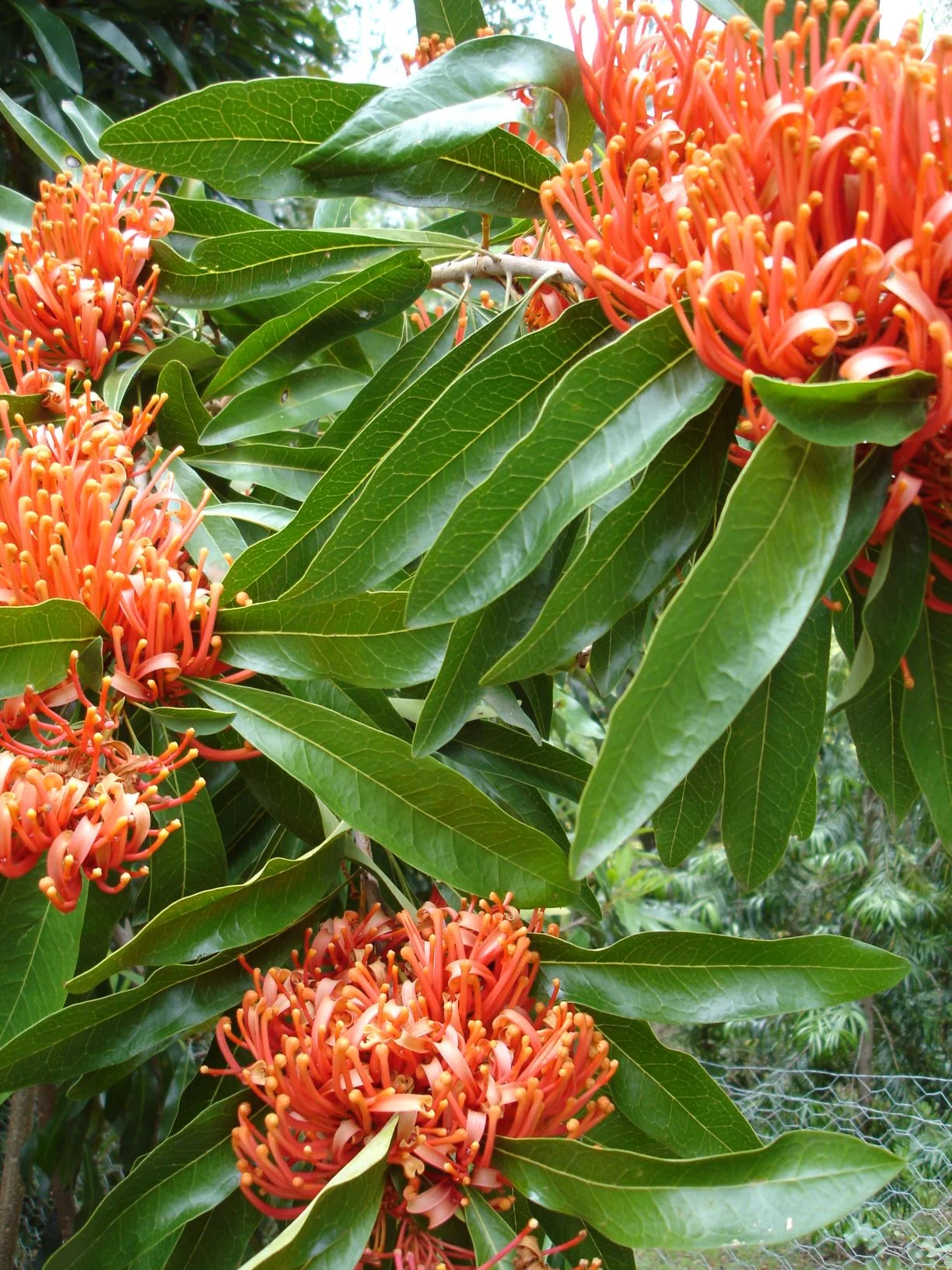
Alloxylon flammeum - Queensland Tree Waratah. One of the most spectacular flowering trees of the rainforest. It grows, and flowers as far south as Melbourne and can be quite fast growing under favourable circumstances. This specimen is growing in the chook pen.
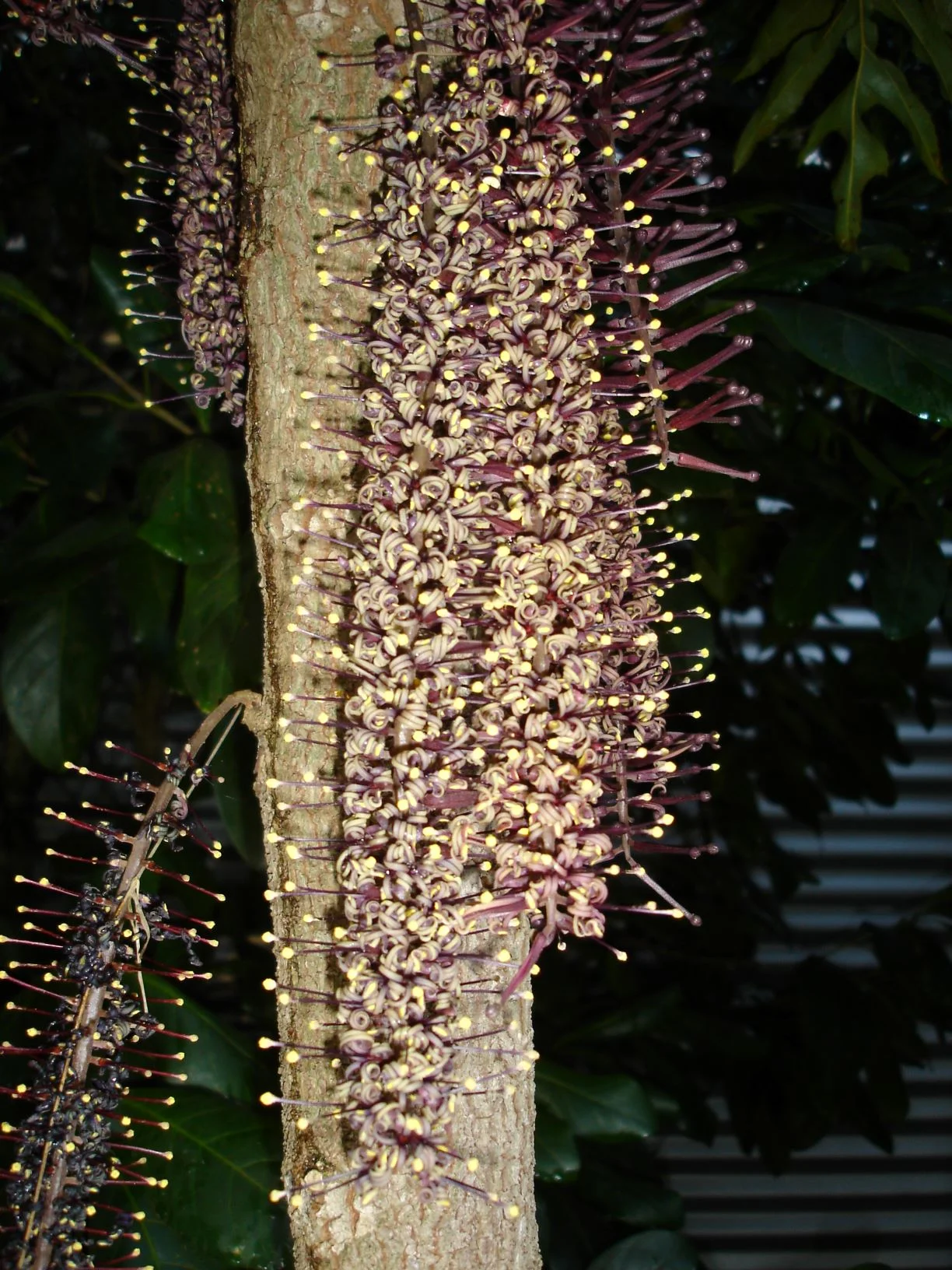
Hicksbeachia pinnatifolia - Red Boppel Nut. Another of the outstanding slender trees of the rainforest often unbranched to 8 metres tall with a canopy of long (up to 1 metre) deeply lobed leaves with coarsely toothed margins. The long racemes of pinkish-purple flowers are strongly scented and are borne on the leafless trunks and stems, and are followed by the highly decorative shiny red fruit. These contain a delicious edible kernel (being related to Macadamias). An endemic species that occurs in Subtropical Rainforest from the Bellinger River. NSW to Tamborine Mountain in south-east Qld.
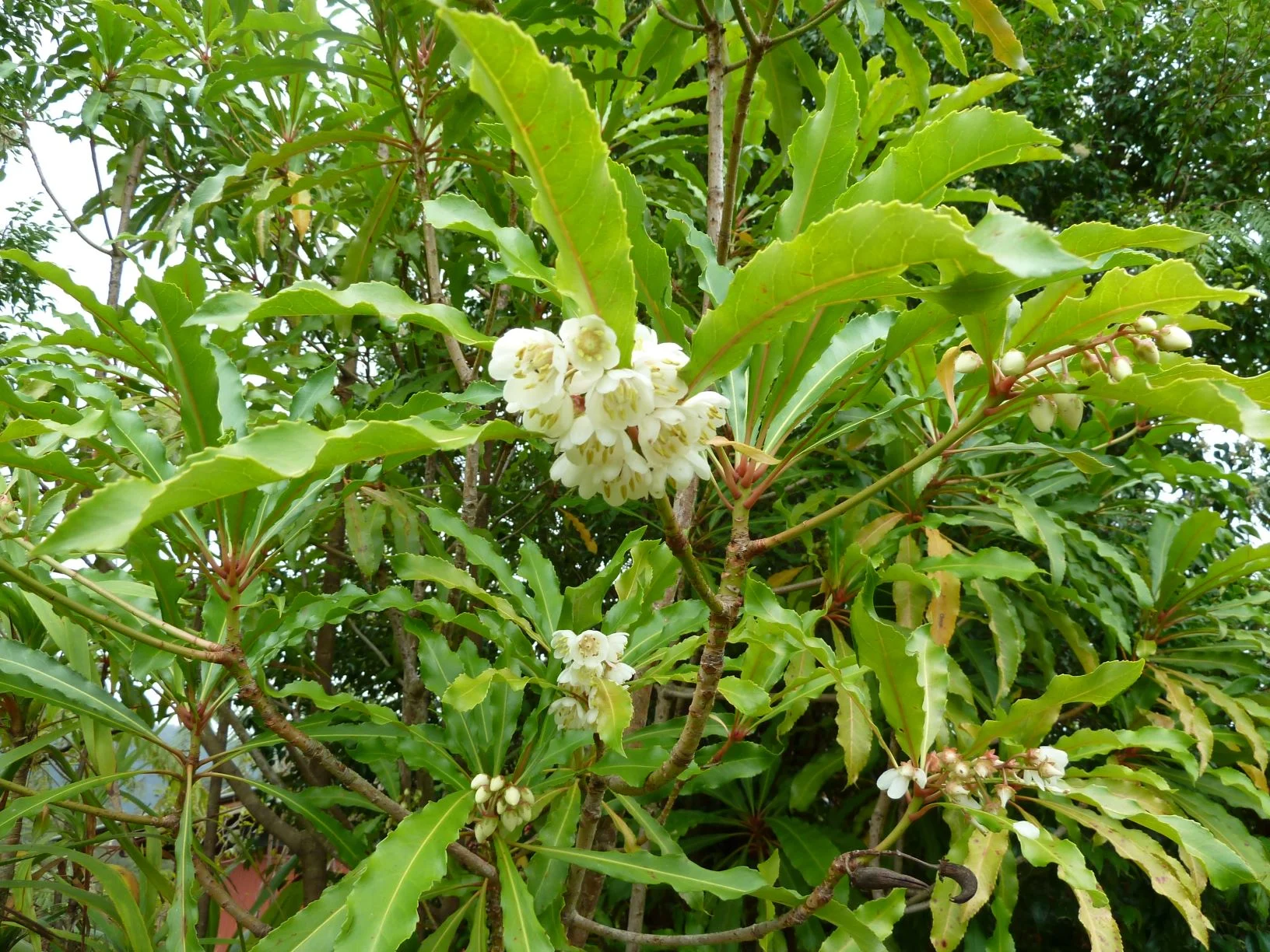
Anopterus macleayanus - Macleay Laurel. This is a highly desirable species for small gardens as it has a slender habit and takes up little room. It can remain unbranched for some years, and looks attractive with its glossy toothed leaves up to 35 cm long. The branches are pinkish red as is the new growth. The white bell-shaped flowers appear in spring and summer. It is a very hardy shrub if given a semi-shaded position and an abundance of water. Occurs from Port Macquarie, NSW to the McPherson Ranges in Queensland.
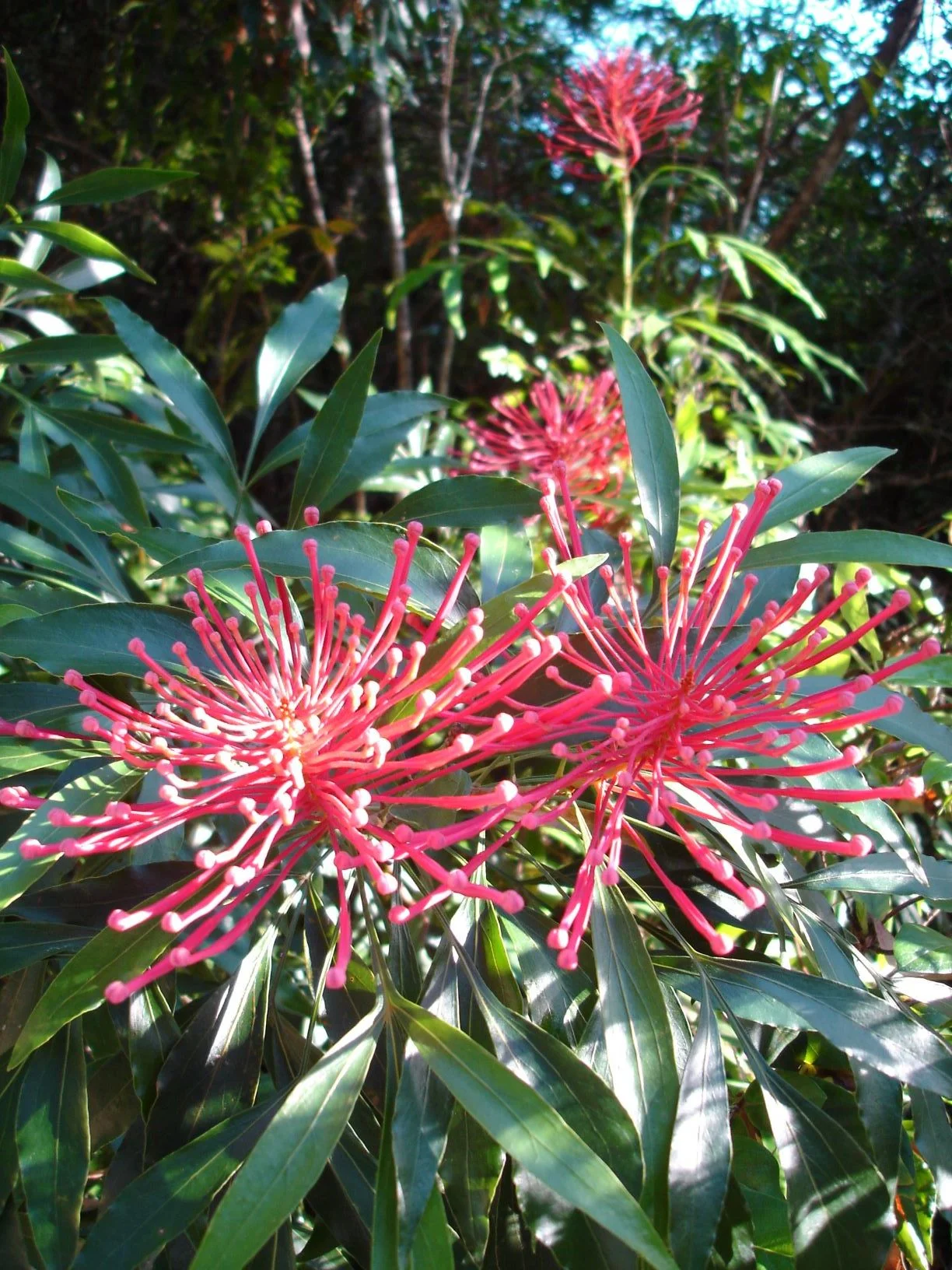
Alloxylon pinnatum - Dorrigo Waratah. Grows in warm-temperate rainforest on escarpment ranges above 700 m altitude usually in poor sedimentary soils in association with Coachwood, and can be found at Missabotti, Dorrigo and Mt Hyland areas, and the McPherson Ranges.
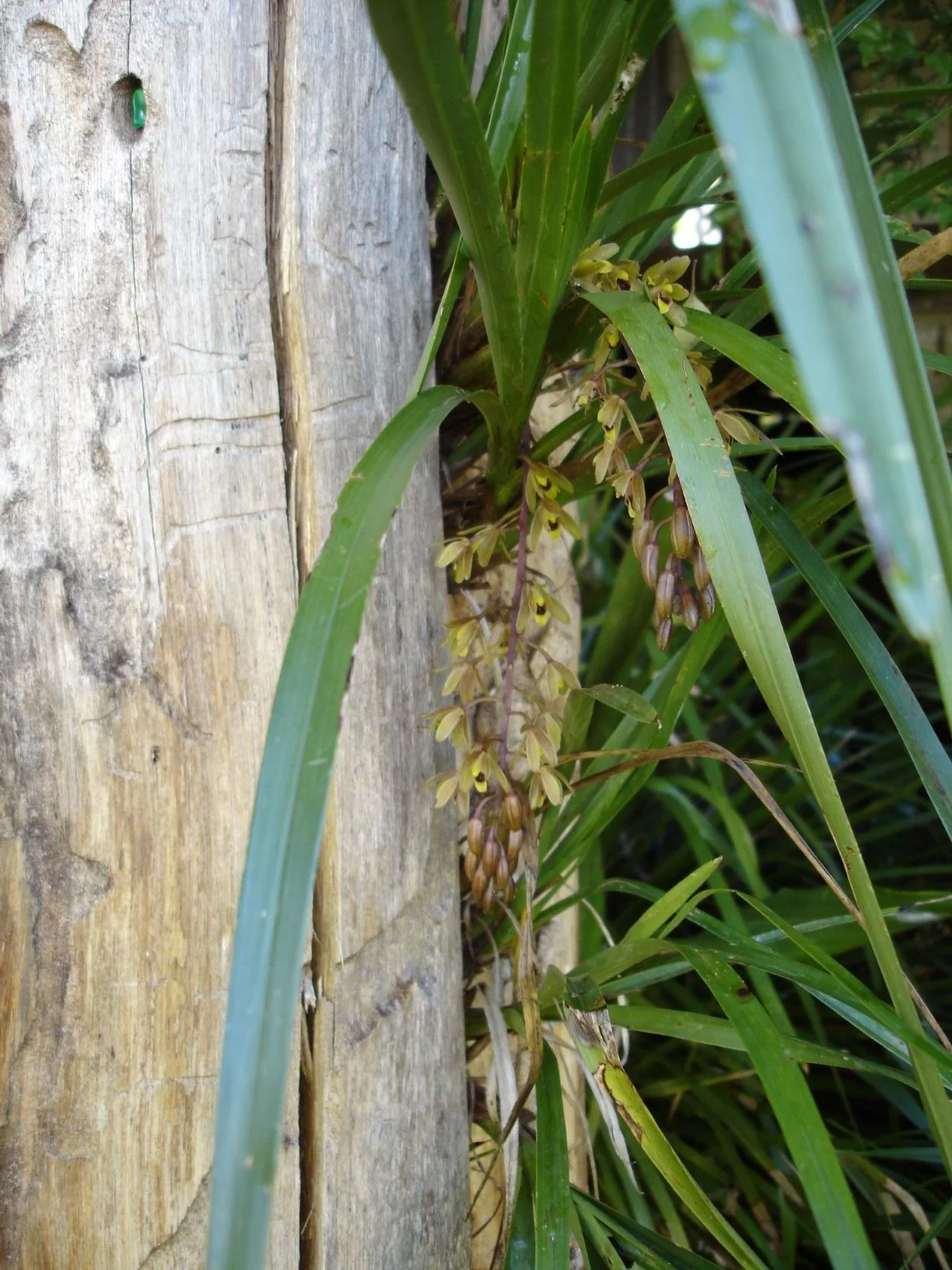
Cymbidium suave - Snake orchid. A native epiphytic orchid with grass-like leaves and heavily spice-scented flowers. It has an extensive rhizome and root system which can penetrate deep into the decaying heartwood of the host tree, and new tufts can sometimes be seen emerging from hollows in trunk and branches.
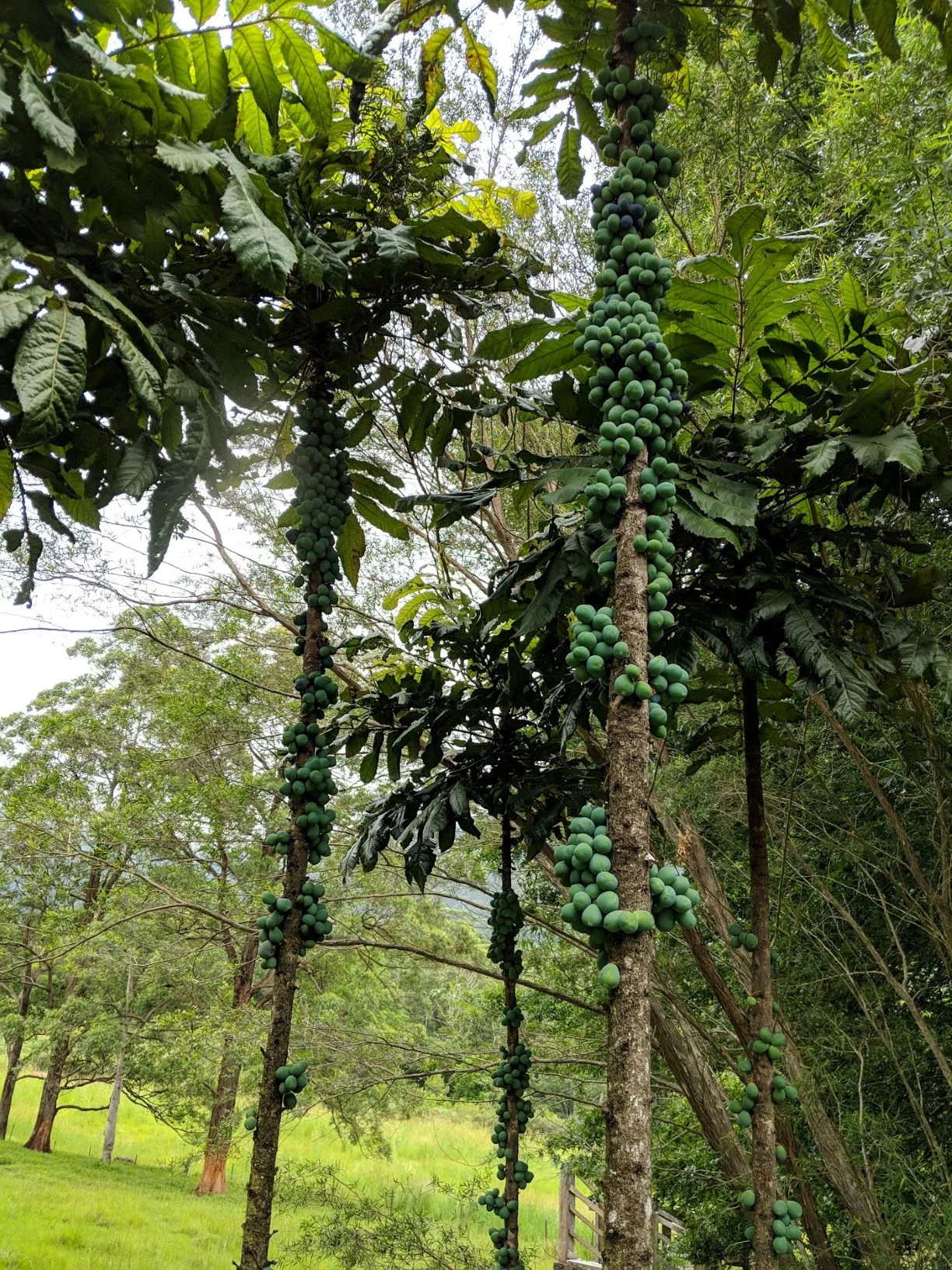
Davidsonia pruriens var. jerseyana- Davidson’s Plum or Ooray. Immature fruit. This is one of those trees which are tailor made for small gardens as it grows in sun or shade and is slender enough to use in the difficult narrow spaces between buildings. It branches sparingly to 5 metres with long arching leaves up to 60cm long and hairy leaflets. New growth is a hairy pink. Hairy pink flowers occur in pendulous clusters on the leafless trunk and are followed by the decorative, blue plum-like fruits which have an unusual but sour taste and is great as a jam. It requires good drainage in a variety of soils and is best protected from drying winds and with partial shade. It occurs in Subtropical Rainforest in the Brunswick and Tweed river valleys. Endemic.
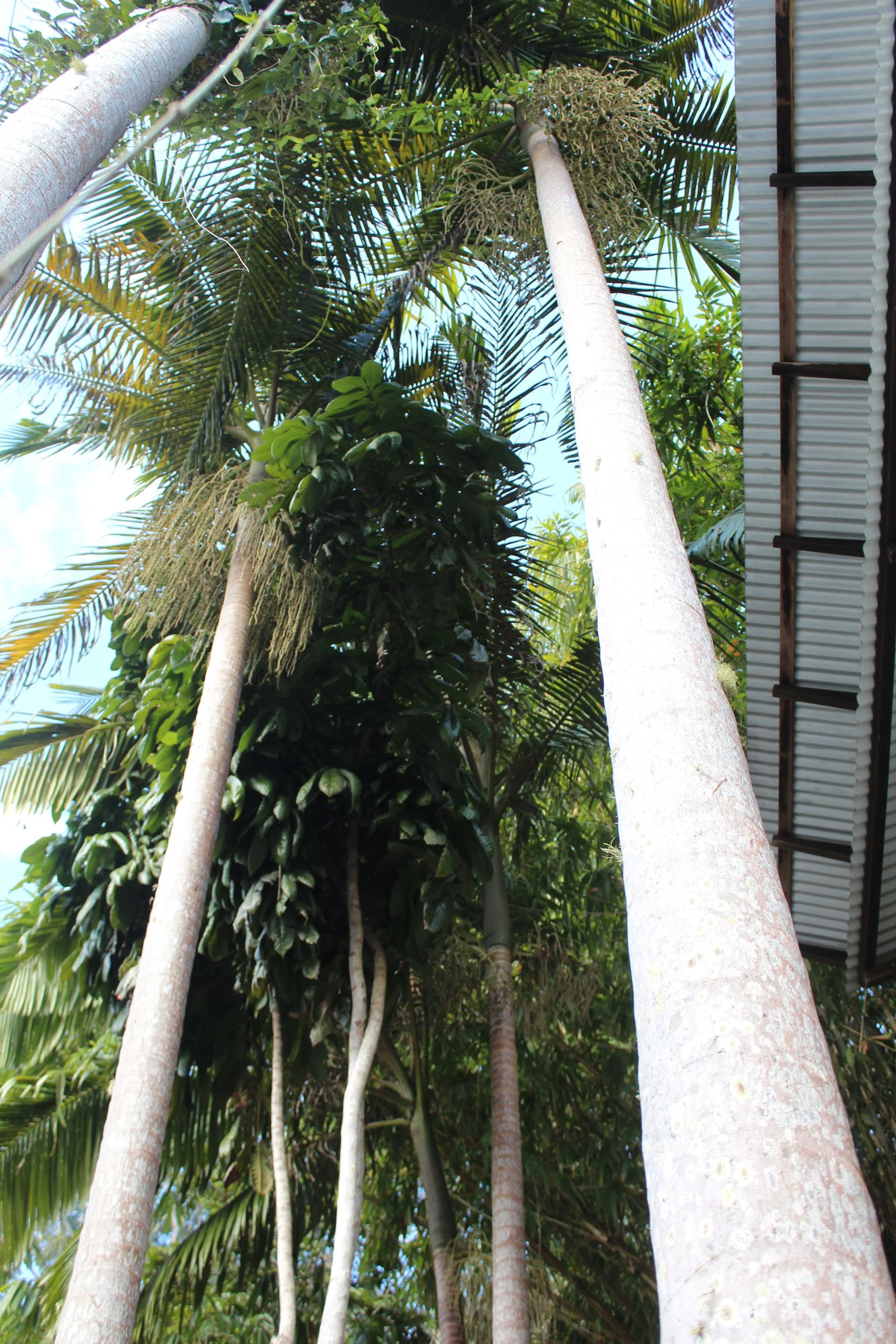
Davidsonia pruriens var. pruriens amongst Bangalow Palms. Var. pruriens is the North Queensland form, larger and hairier in all respects than its southern cousin.
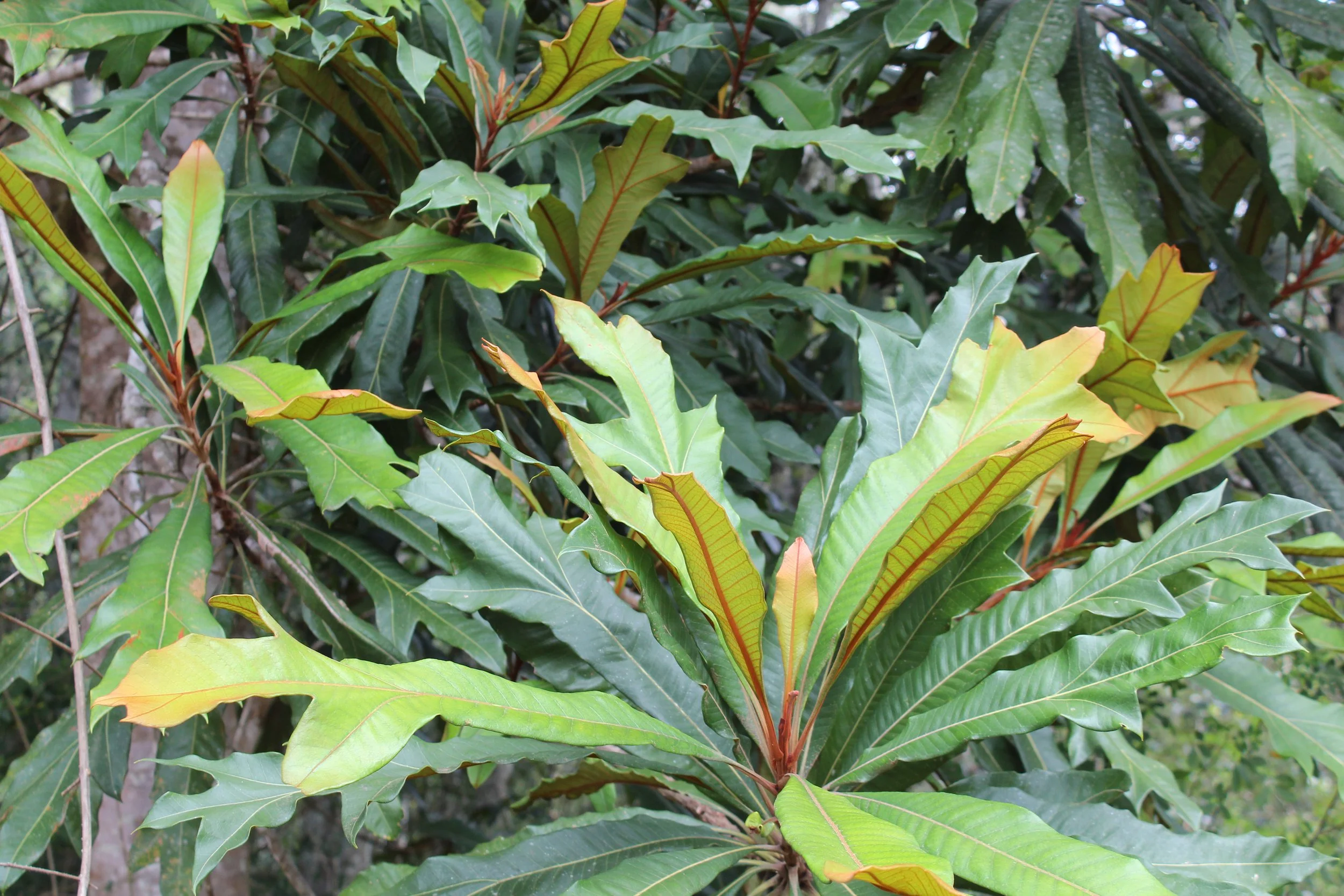
Darlingia ferruginea Rose Silky Oak. The deeply lobed juvenile leaves of this species are up to 1 metre long and carried well into maturity. The young shoots and the undersurface of the leaves are covered in rusty hairs giving the canopy a golden brown appearance. The flowers are similar to D. darlingiana but a little longer and fragrant. It is one of the most spectacular foliage plants to be seen and only in Australia could such a beautiful plant be overlooked for so long. an endemic species from the tropical rainforest of north-eastern Queensland.
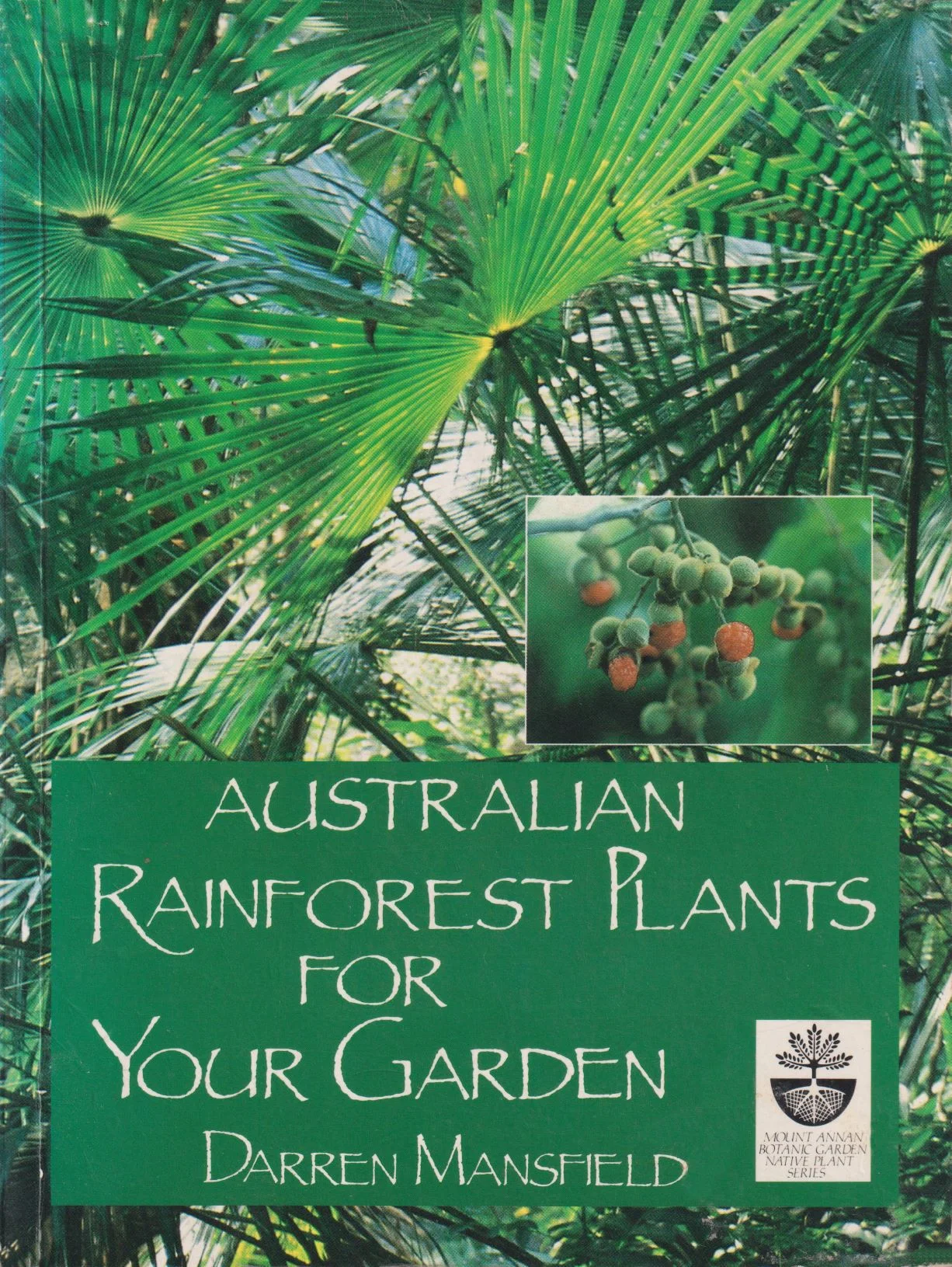
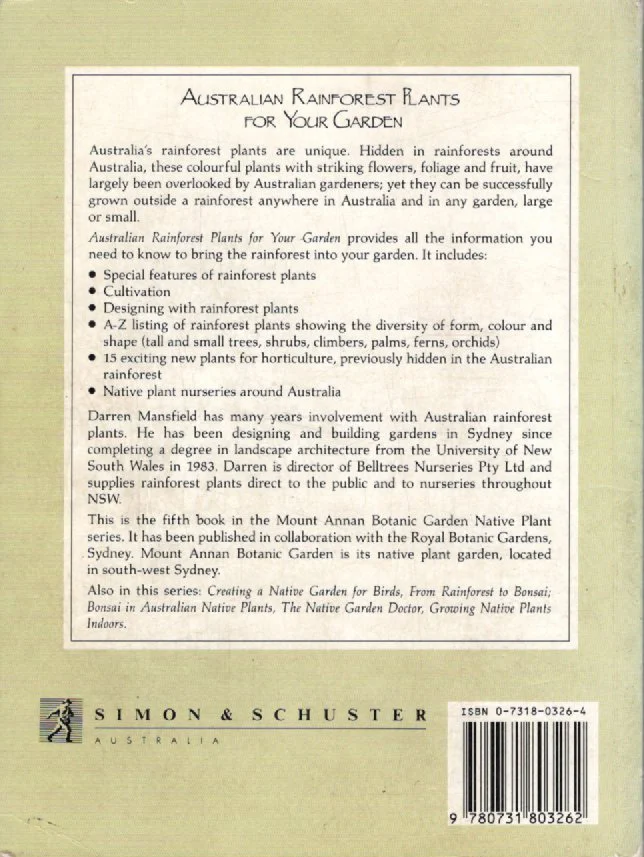
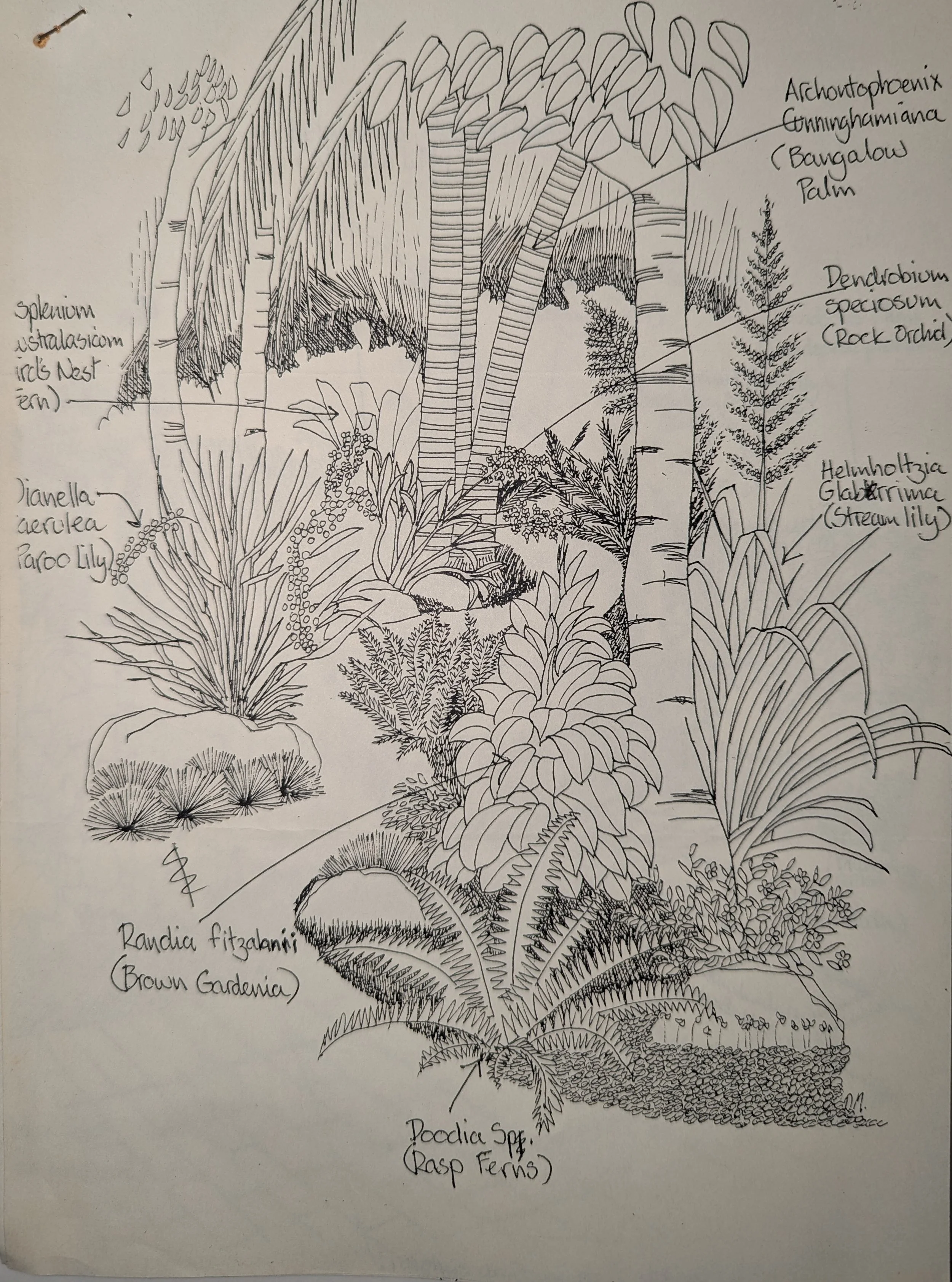
A sketch from the book
Rainforest
Australian rainforest PLAnts
Darren is the author of Australian Rainforest Plants for Your Garden (Simon and Schuster 1992) and popularised the use of Australian rainforest plants and other rare native plants through his specialist nurseries at Dural and Gleniffer, growing and propagating sometimes rare but always wonderful little-known plants.
60% of Australian plant species occur in the rainforest, making them an essential consideration for any landscape project in Australia, especially on the east coast.
And if you would like to transform your garden into a rainforest sanctuary, please don’t hesitate to be in touch.