Pulpit Rock's amazing Lower Lookout is now complete
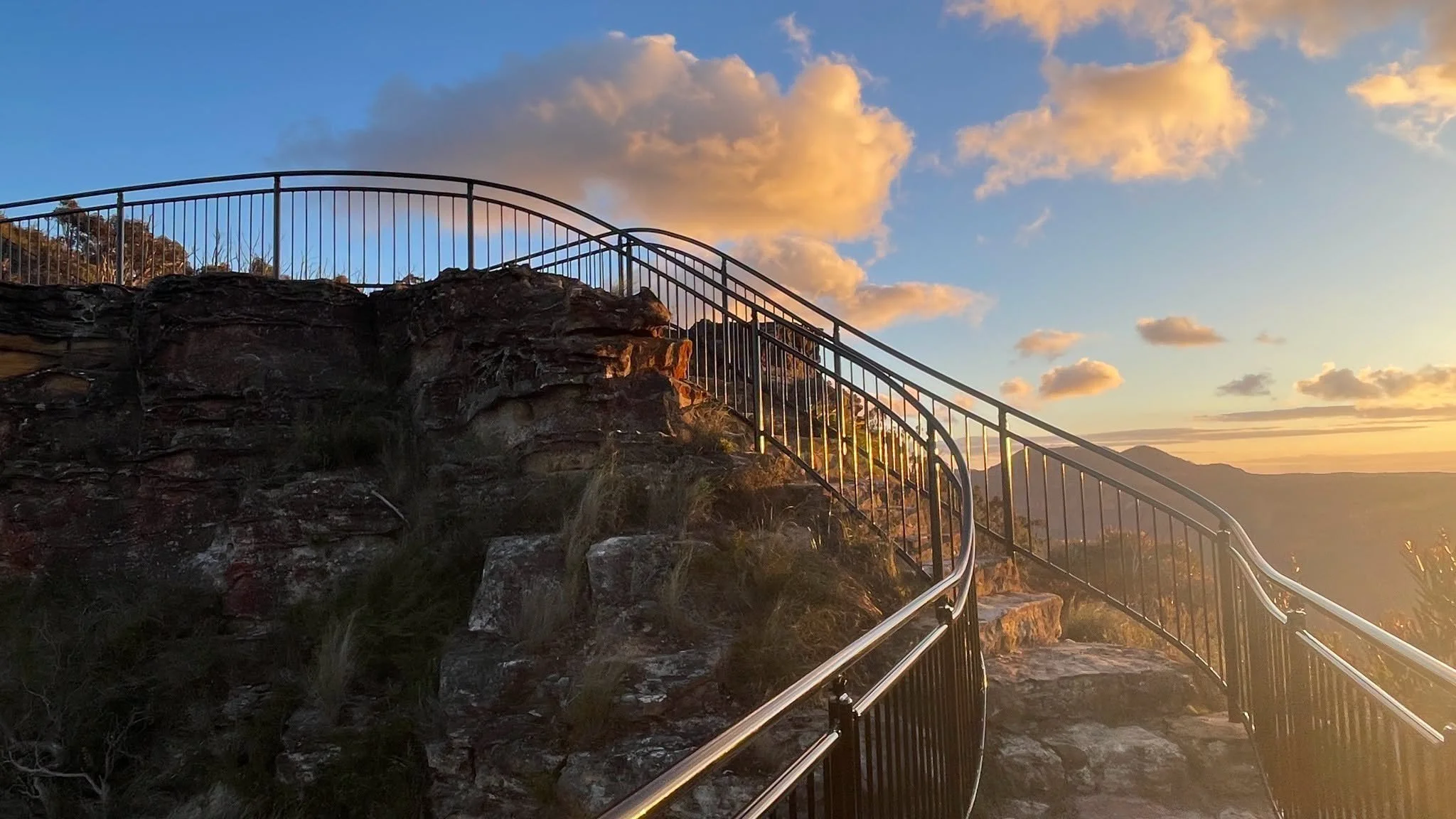
33 Parallel designed the lower lookout at Pulpit Rock after it was closed for public safety since the 2019/2020 summer bushfires, which destroyed all visitor infrastructure at the site. All three lookouts have now been upgraded with Australian Standard-compliant balustrades, new furniture and signage and improved walking track connections.
The upgrade included 250 metres of safety fencing, 1.6kms of walking track with 400 sandstone steps over some very steep terrain, signs, seating and upgrade and new roof for the burned-out ironstone picnic shelter shed and a fire-damaged ironstone pan toilet. Works also include major improvements to Pulpit Rock Road, formalised parking, native landscaping, track upgrades and drainage works.
According to Ask Roz Blue Mountains “You can't fault the quality of the work done”.
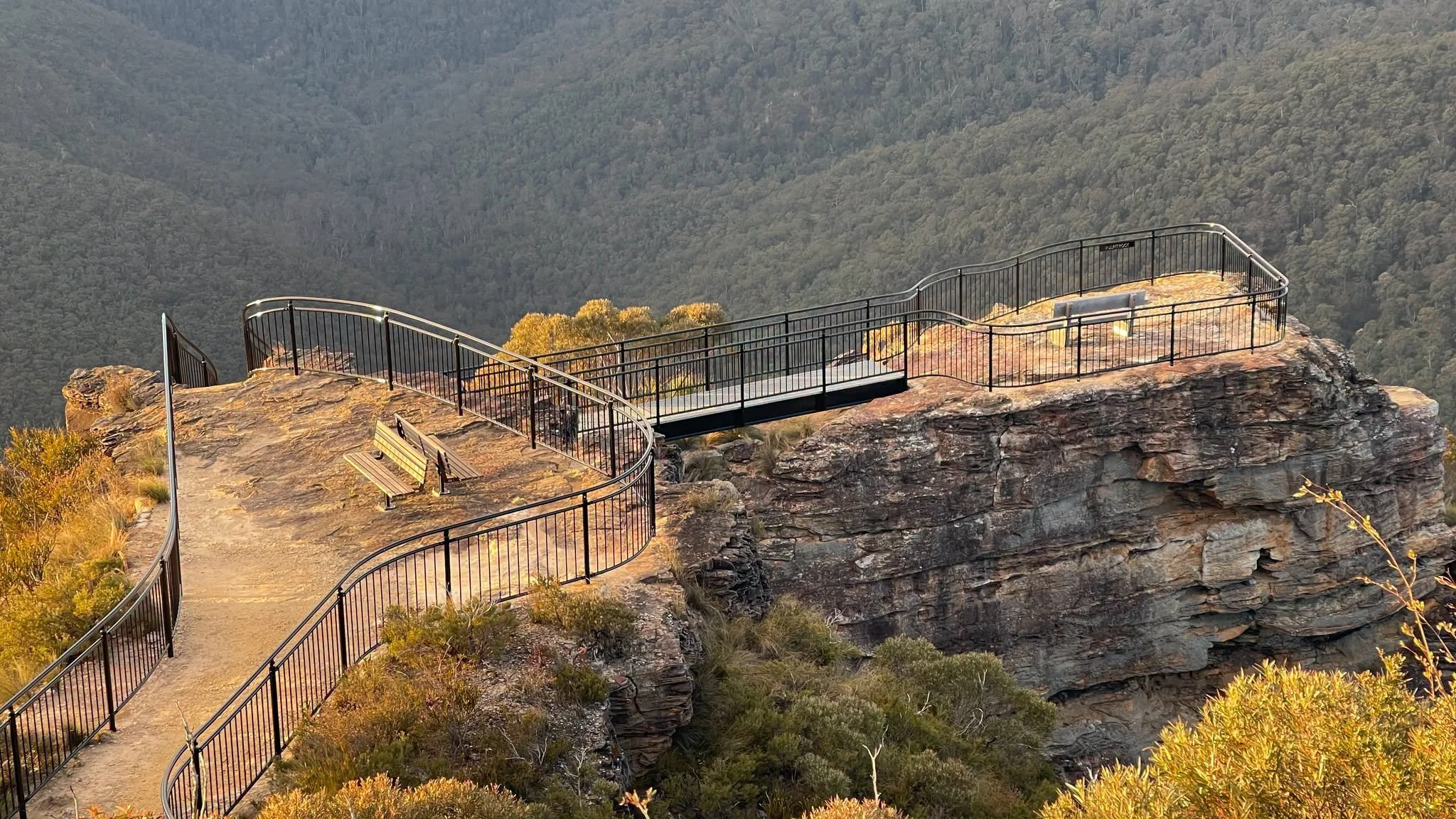
The new lower Pulpit Rock lookout with views north and east into the Grose River Valley and the Blue gum Forest. Photo; Ask Roz Blue Mountains
Photo; Ask Roz Blue Mountains
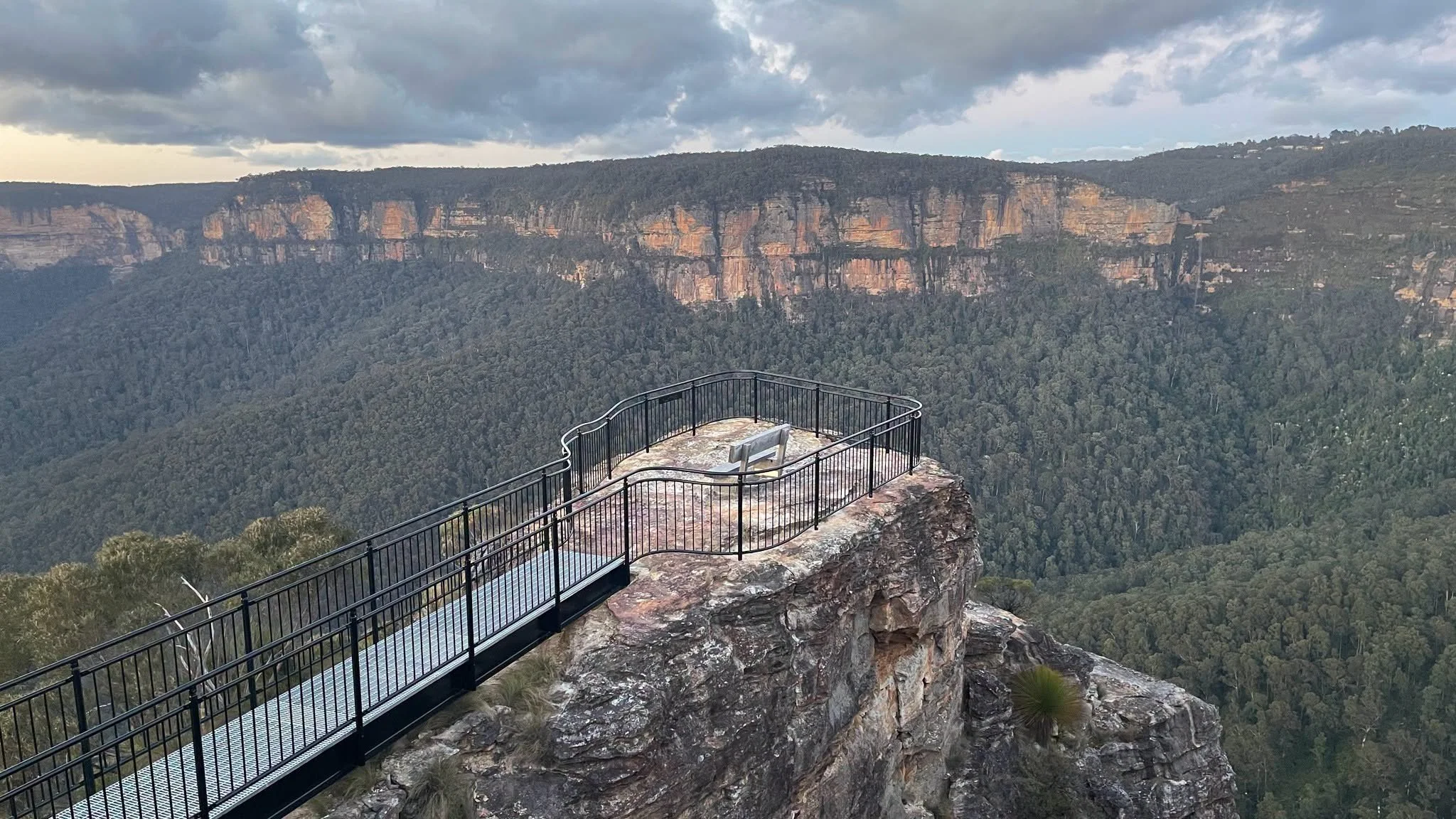
A steel bridge deck connects two sections of the lookout Photo; Ask Roz Blue Mountains
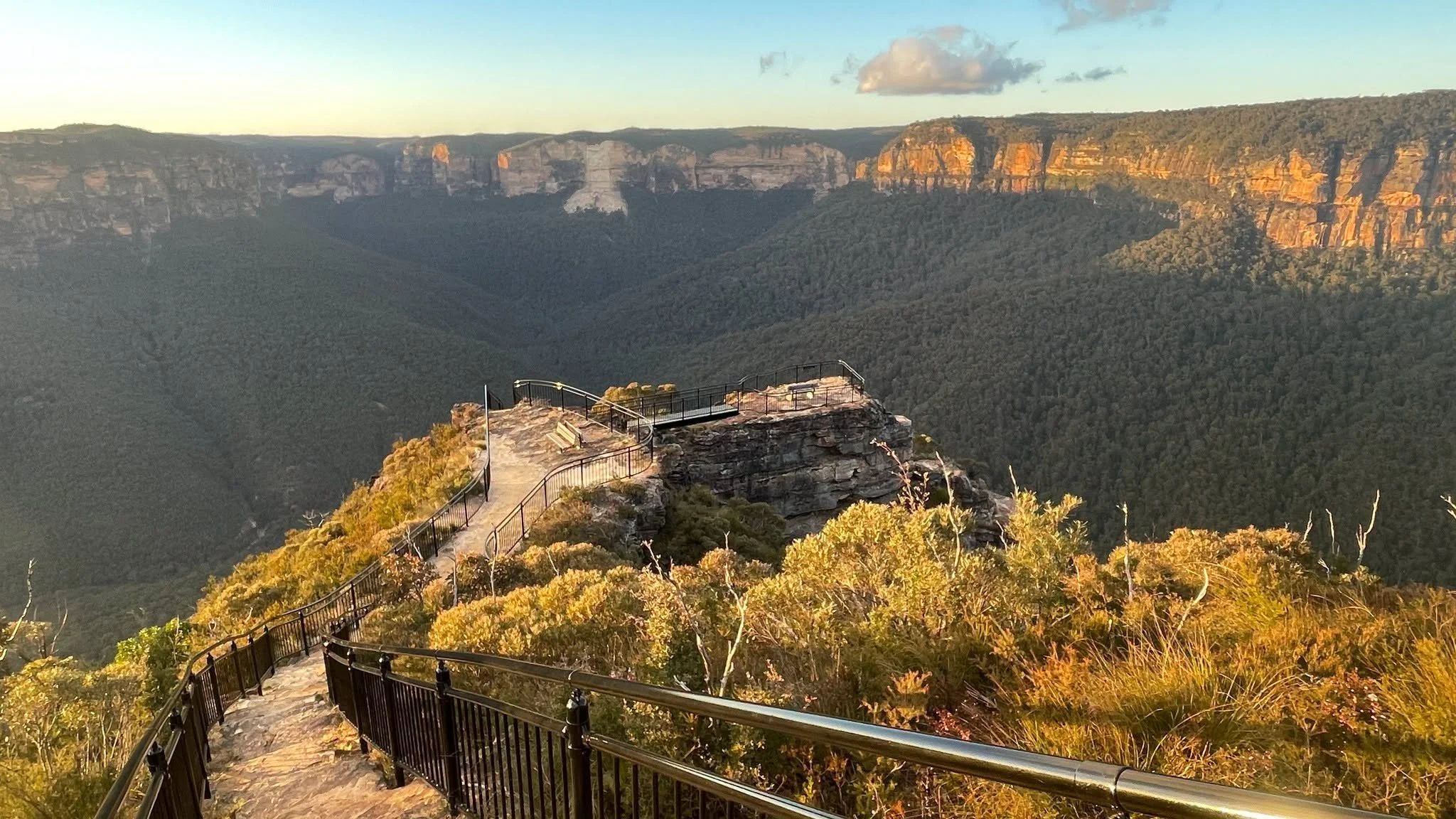
Photo; Ask Roz Blue Mountains
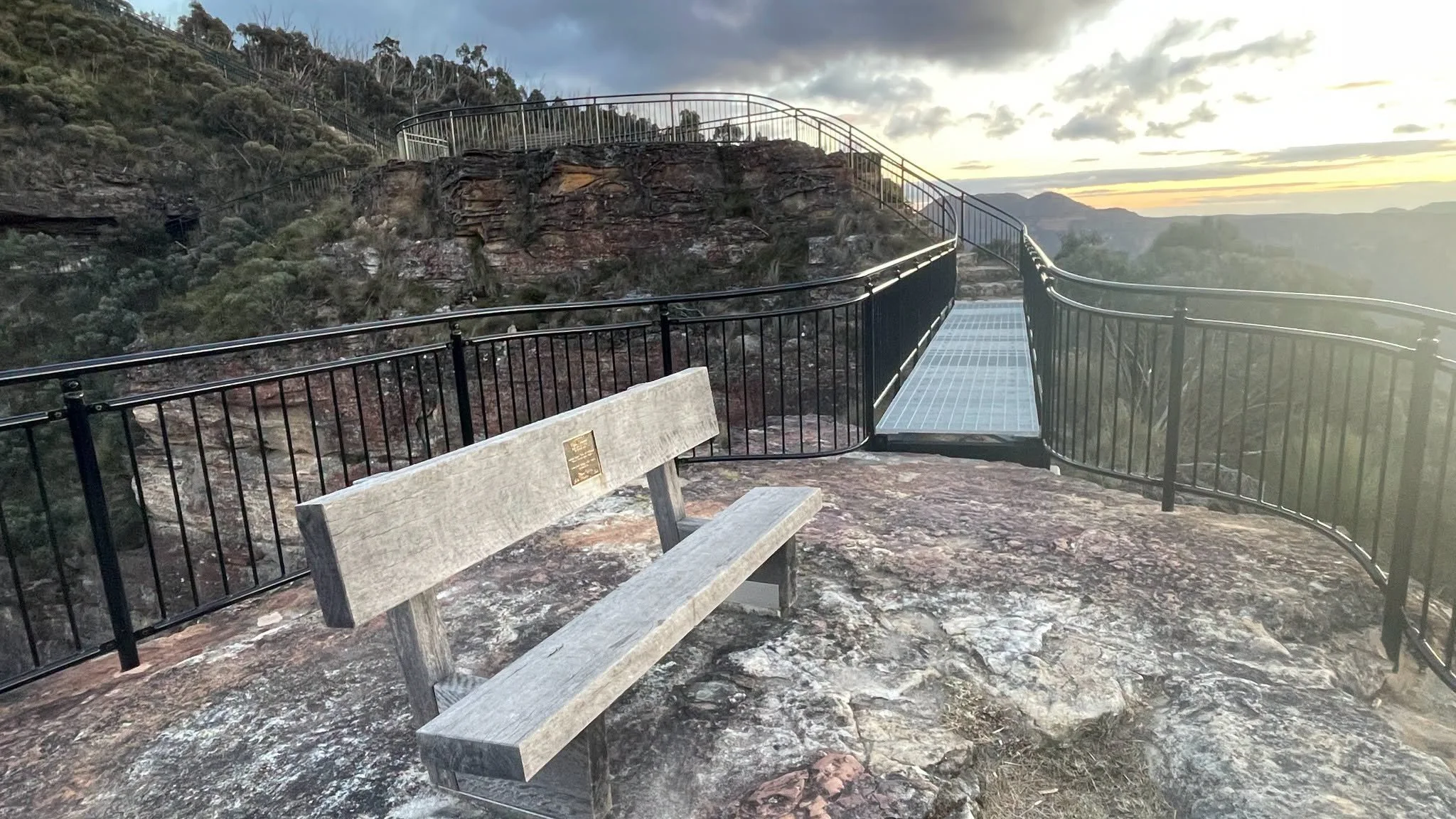
Photo; Ask Roz Blue Mountains
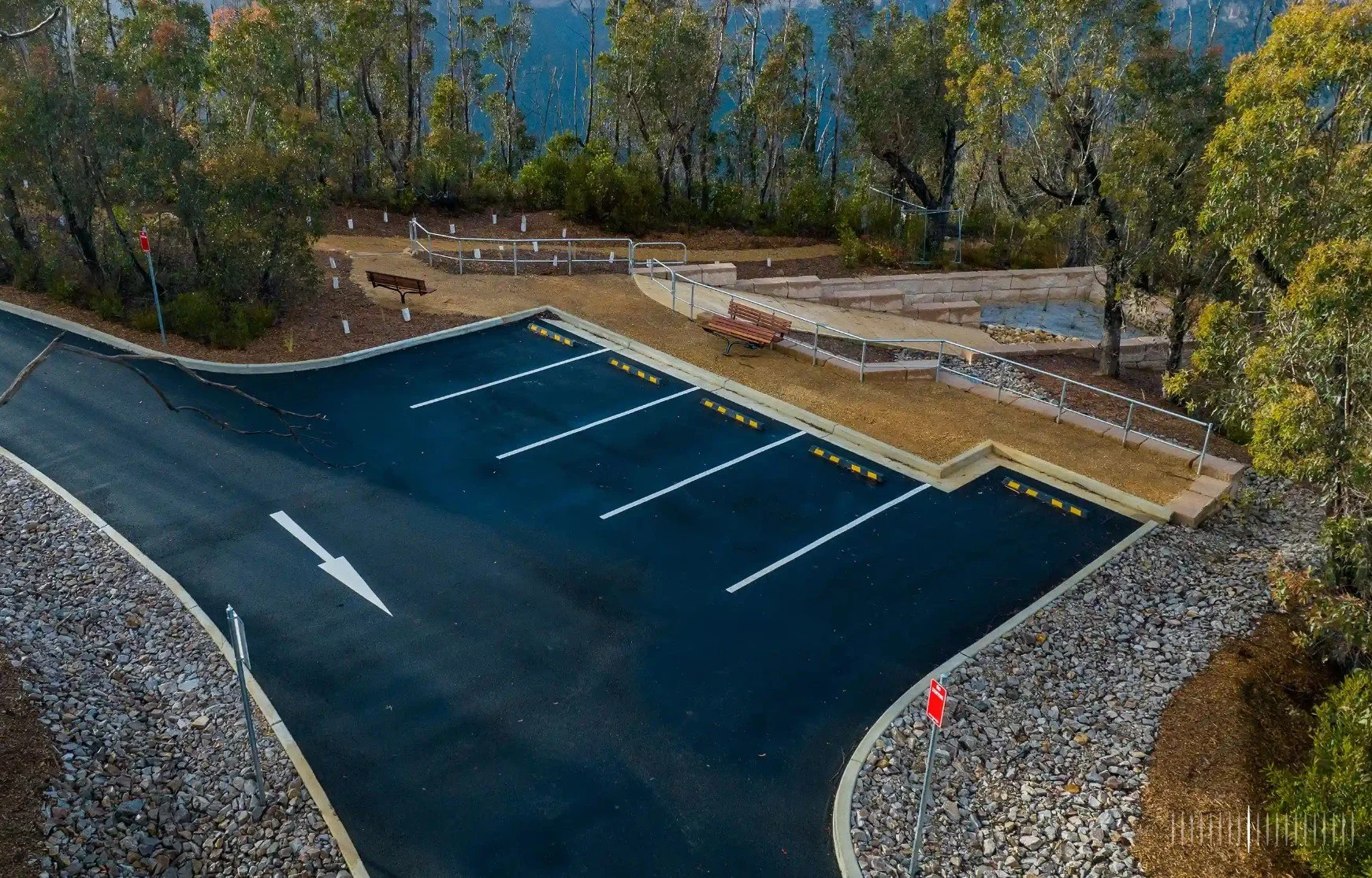
The lower car park with the start of the track to the lower lookout and new bioretention basin to prevent pollutants from entering the National Park
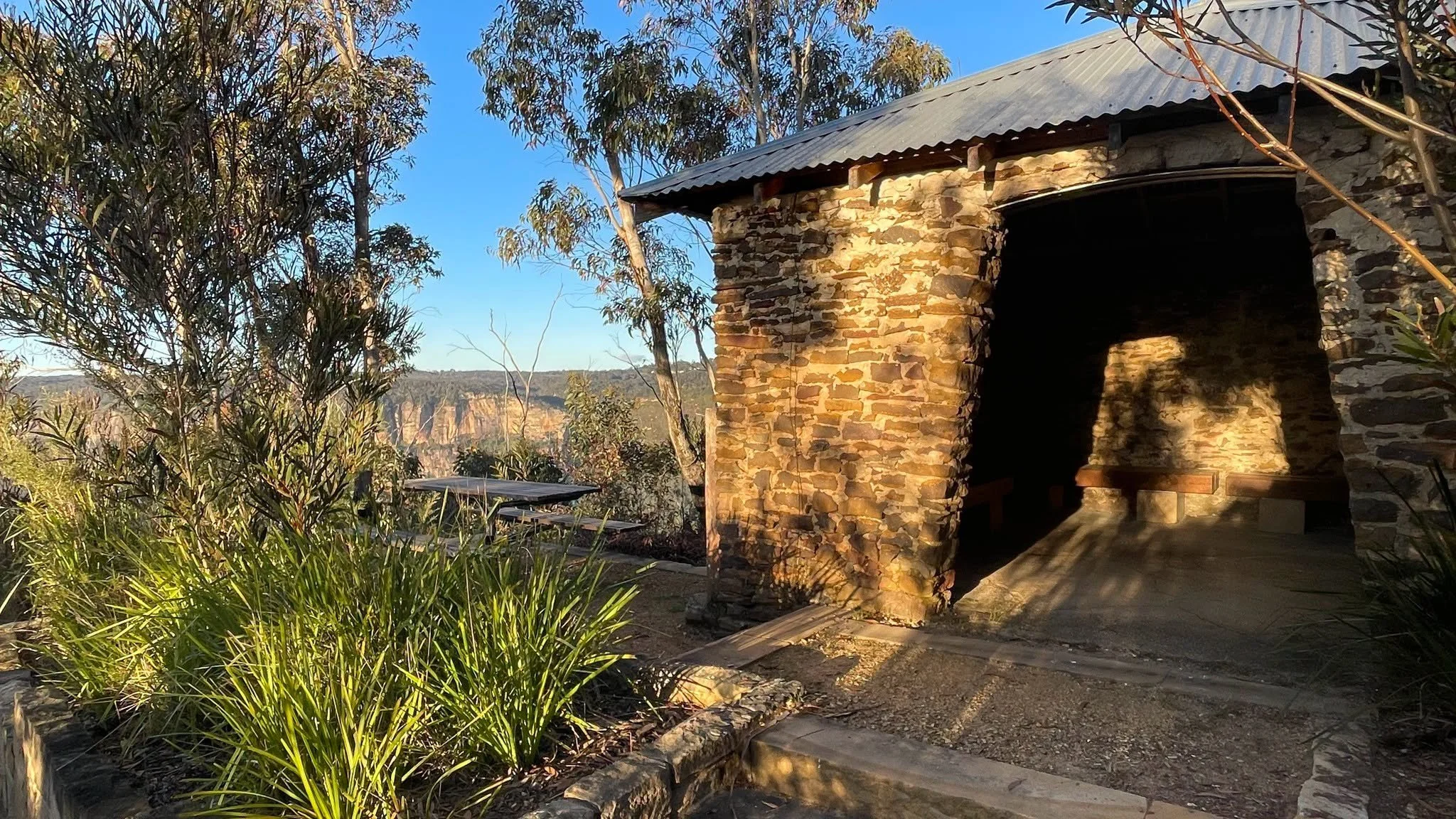
The burned-out ironstone picnic shelter shed and a fire-damaged ironstone pan toilet were restored as part of the project. Photo; Ask Roz Blue Mountains
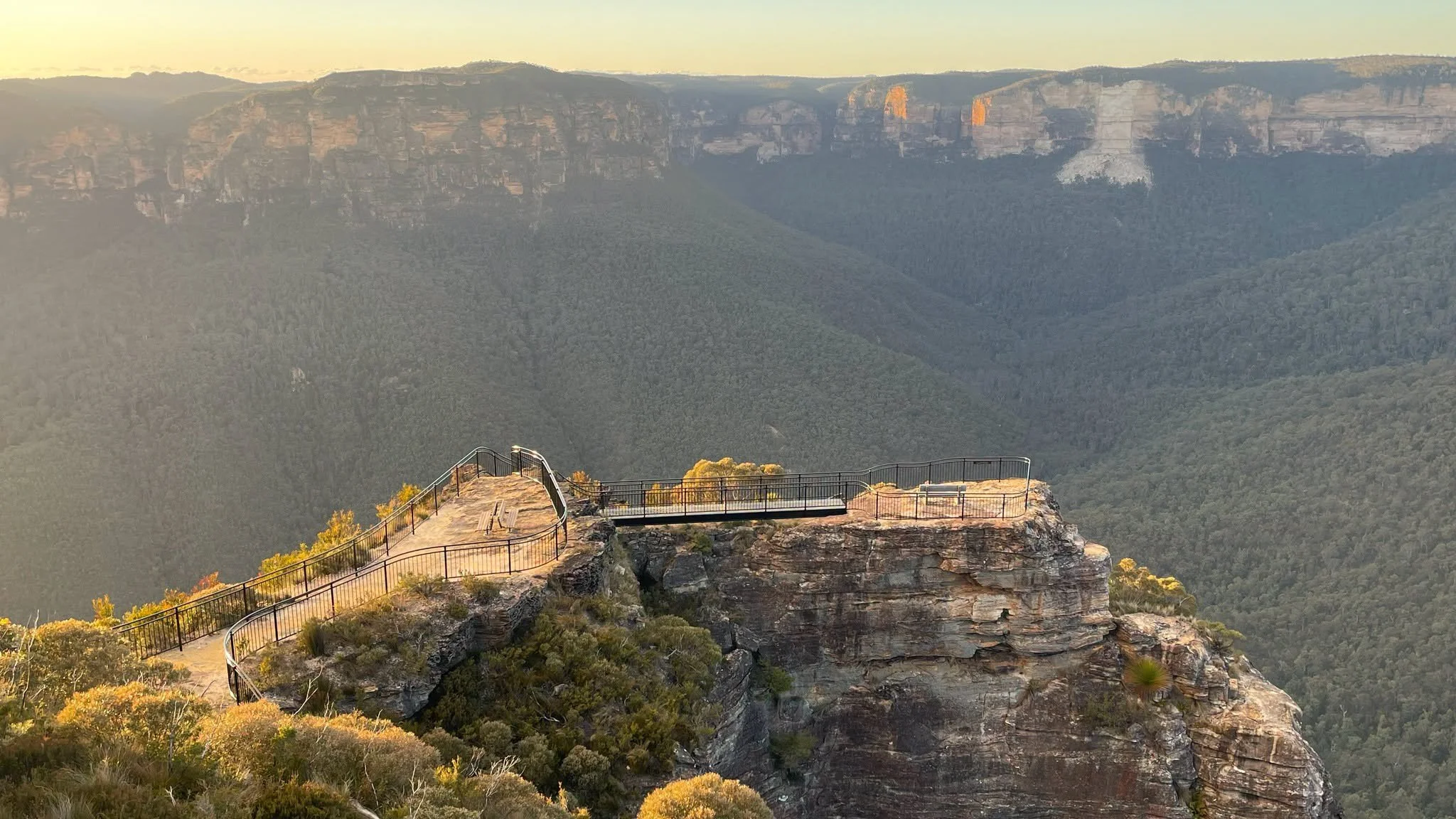
Pulpit Rock Lookout has several viewing points connected by steps and boardwalks. There is a magnificent uninterrupted 210 degrees panoramic view over the valley of Govetts Brook, including Govetts Leap, Bridal Veil Falls, Grose Canyon and extensive sandstone cliffs. Below the lookout is a view into the temperate rainforest known as The Jungle. Photo; Ask Roz Blue Mountains
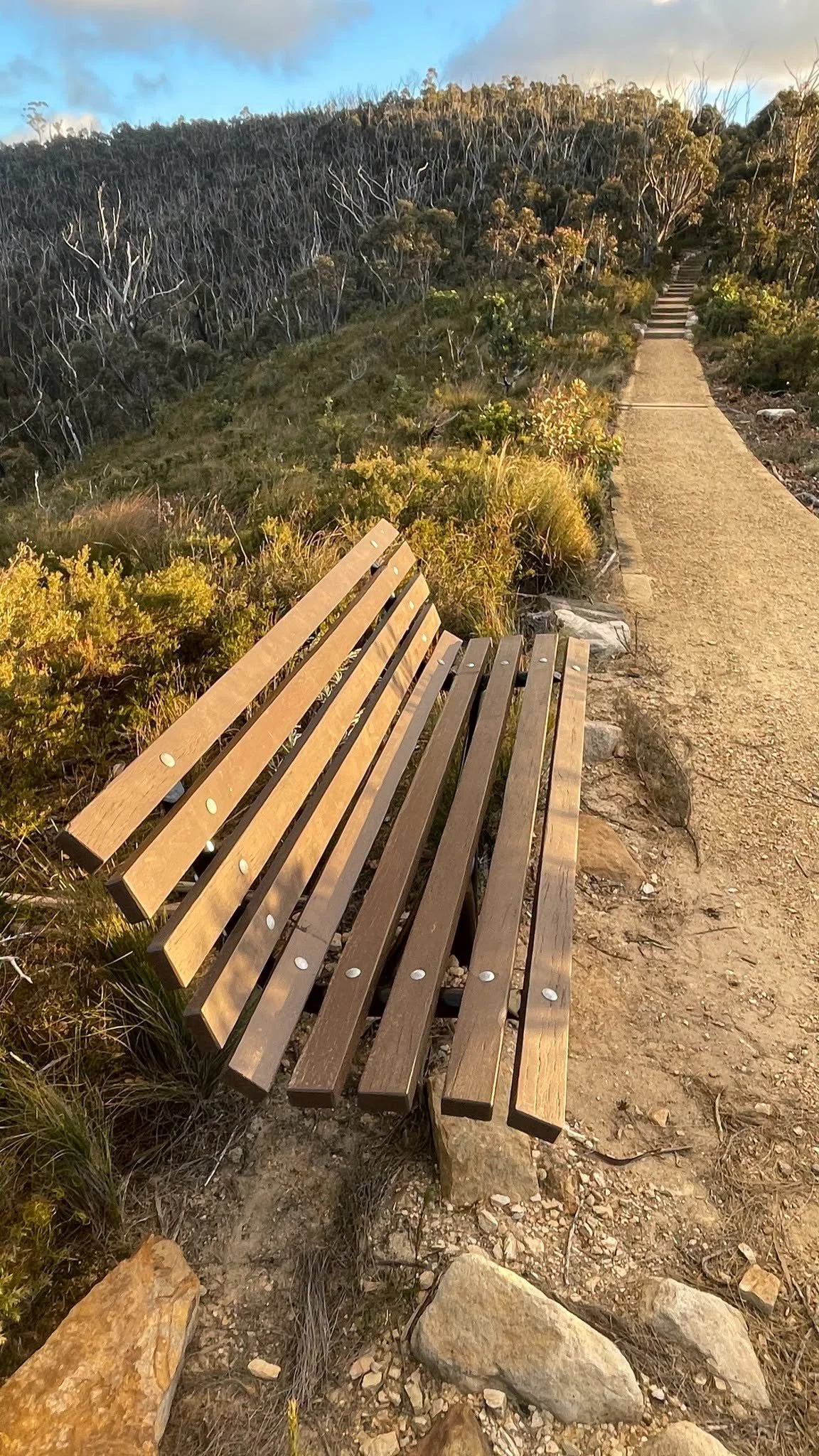
The sandstone block-lined track with sandstone steps. Photo; Ask Roz Blue Mountains
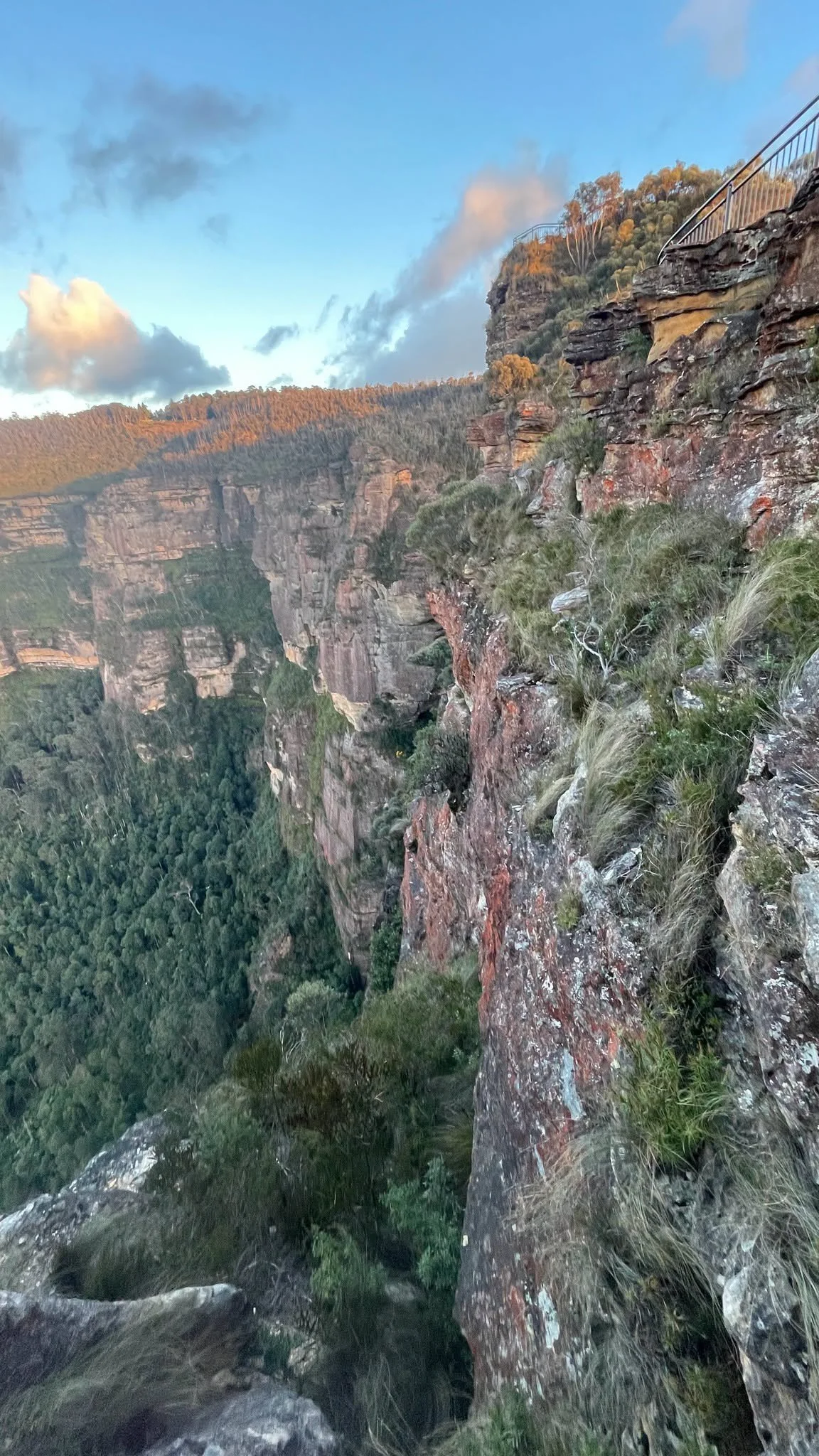
The view looking south-west towards Govetts leap. Photo; Ask Roz Blue Mountains
Gleniffer Garden
We recently stayed at the home and garden we built on the Never Never River from 1994-2007 and had a chance to see how the house and plants had fared in the intervening years. The house started as a very large single room with a kitchen and a big verandah, then as kids came along we added a big shed, bedroom wing and a tower for a guest house, all of which formed a bit of a quadrangle in the end. The new owners are artists and have only added to the charm and eccentricity of the place.
All of the plantings are Australian native rainforest trees and are now 30 years old.
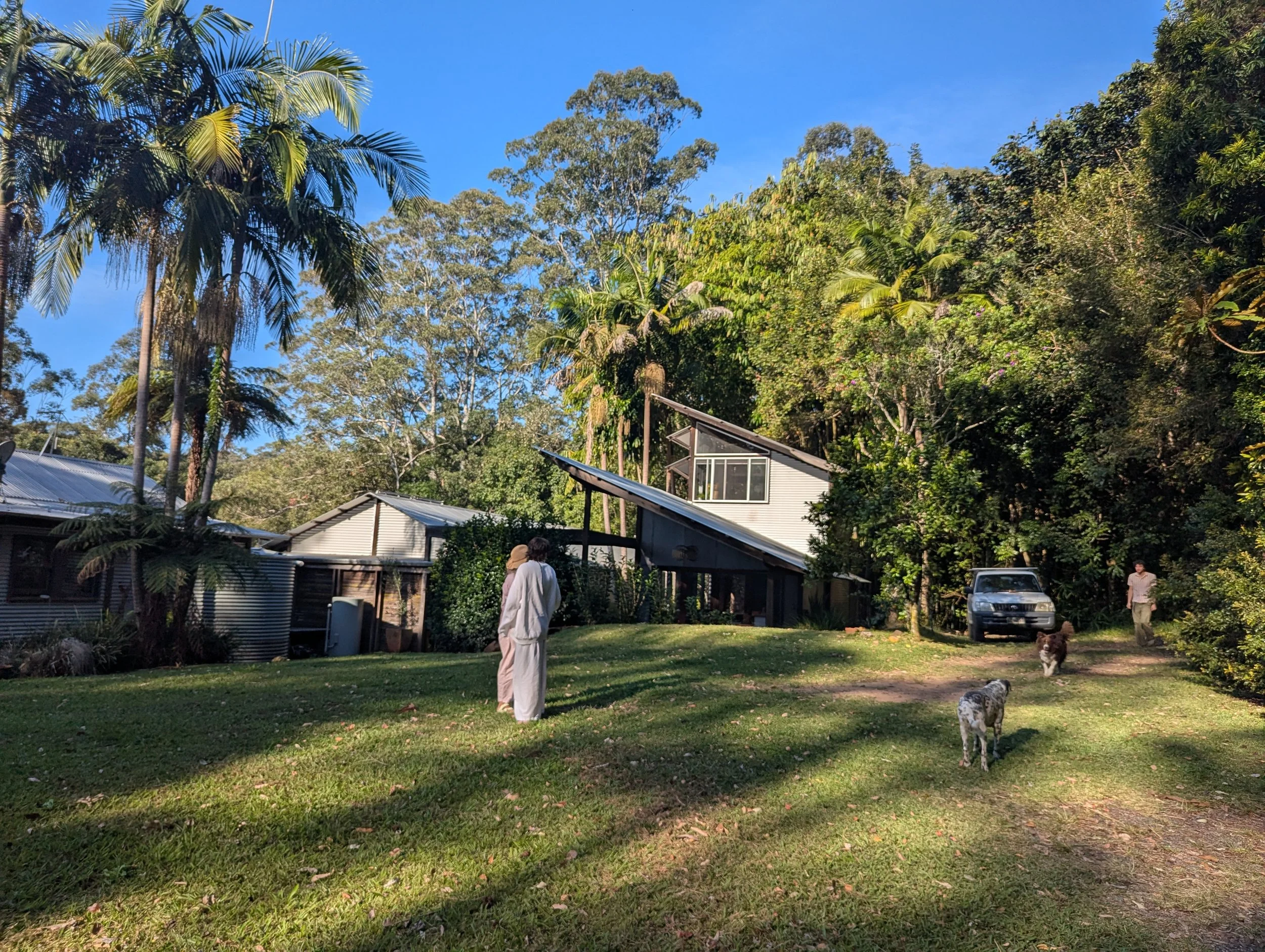
The buildings form a quadrangle at the rear wit a large flat grassed area.
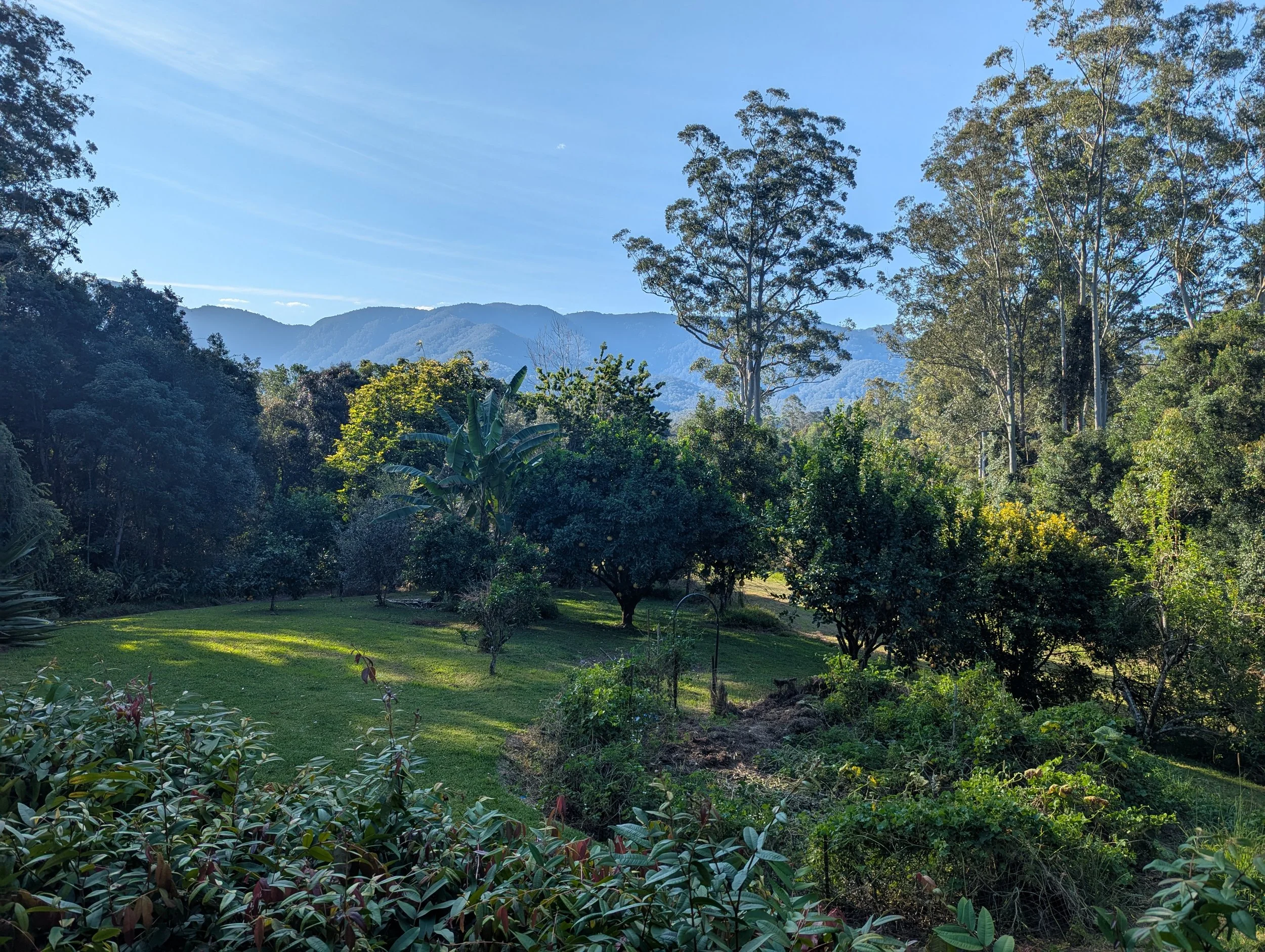
The north verandah has the most magnificent views of the Dorrigo escarpment. Syzygium wilsonii in the foreground.
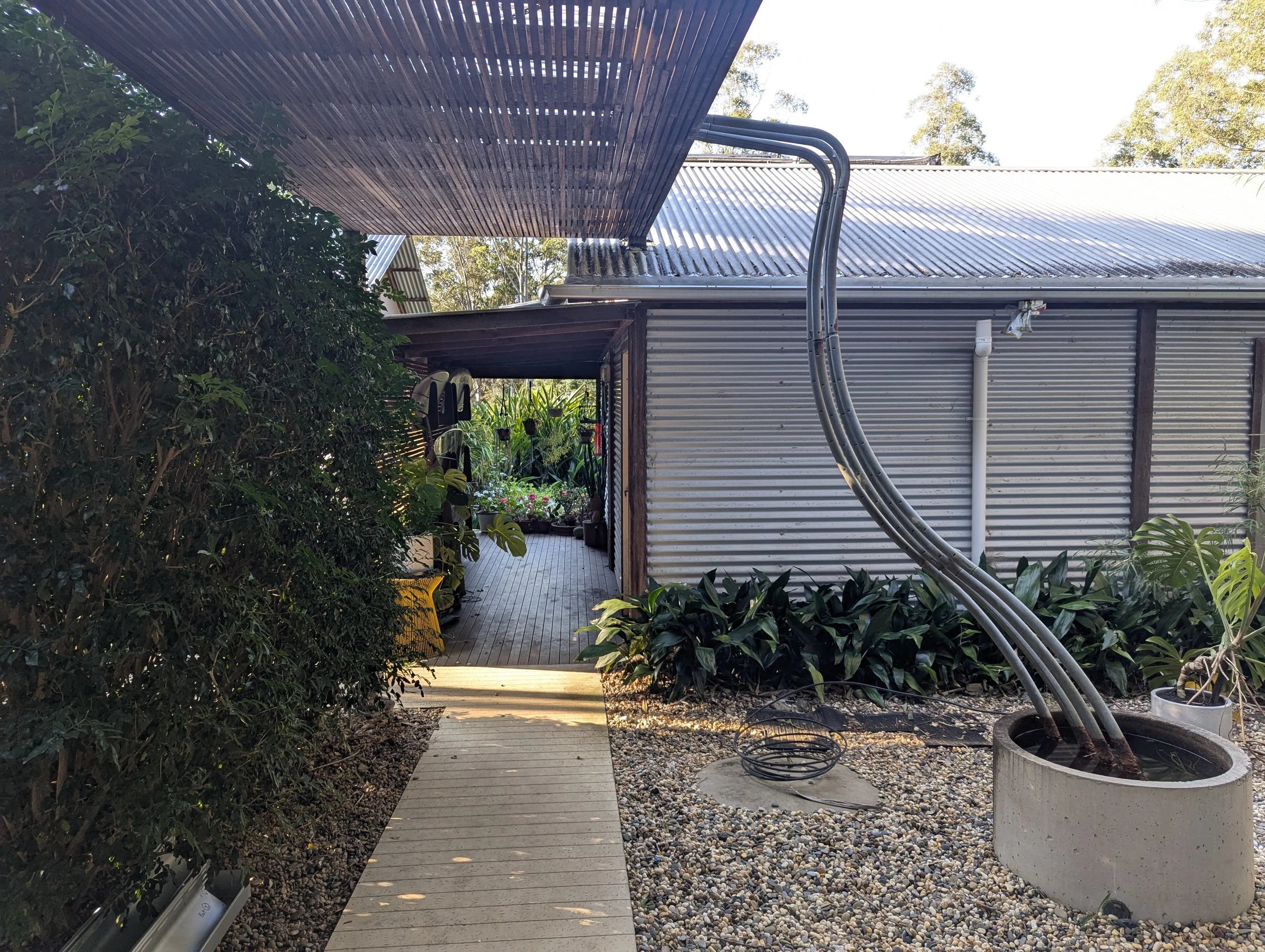
We left our old kids trampoline behind and Tom the artist transformed it into this crazy interesting downpipe. He also laid the concrete path with decorative sawcuts and teaspoon scoops.
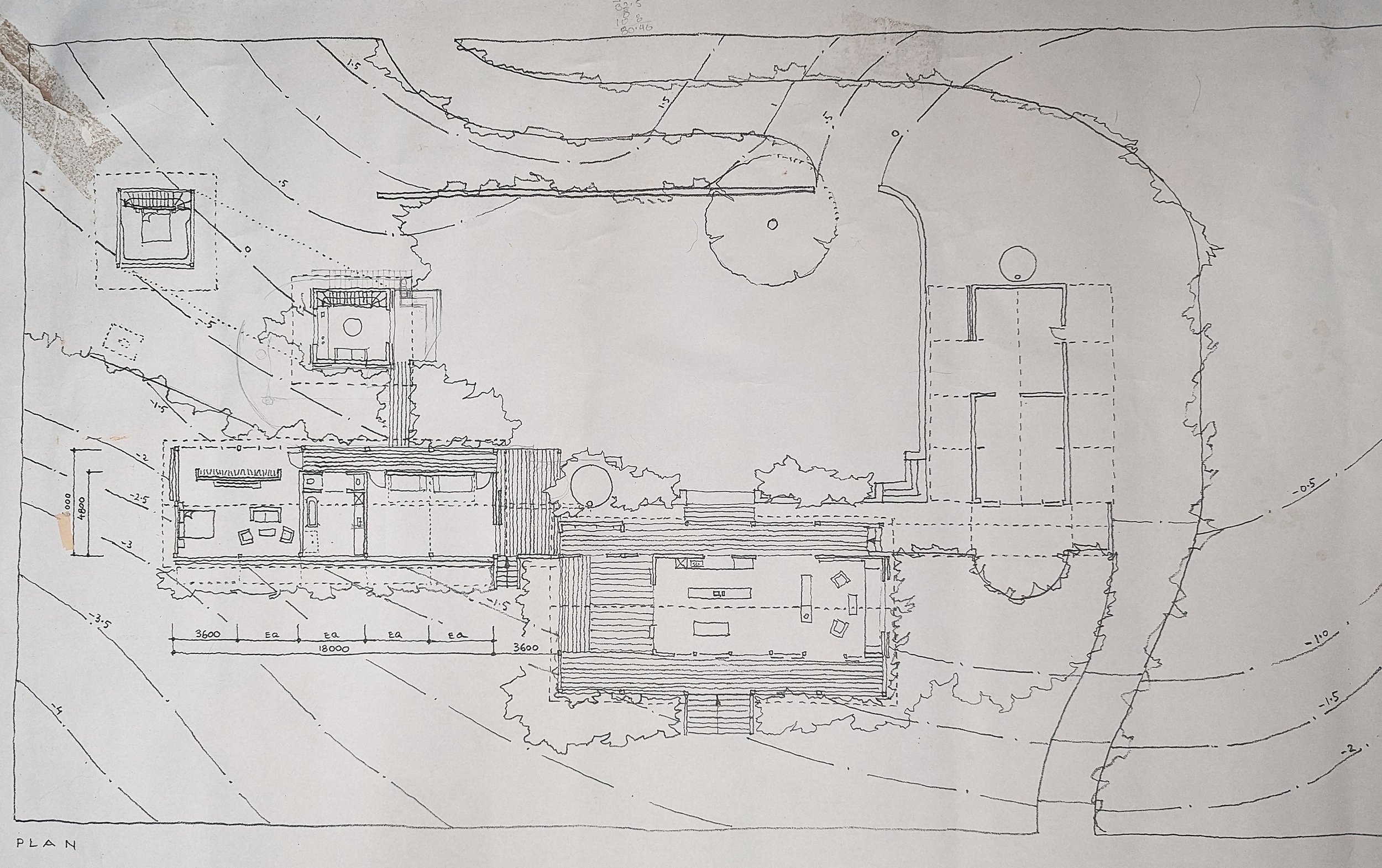
The original hand-drawn plan
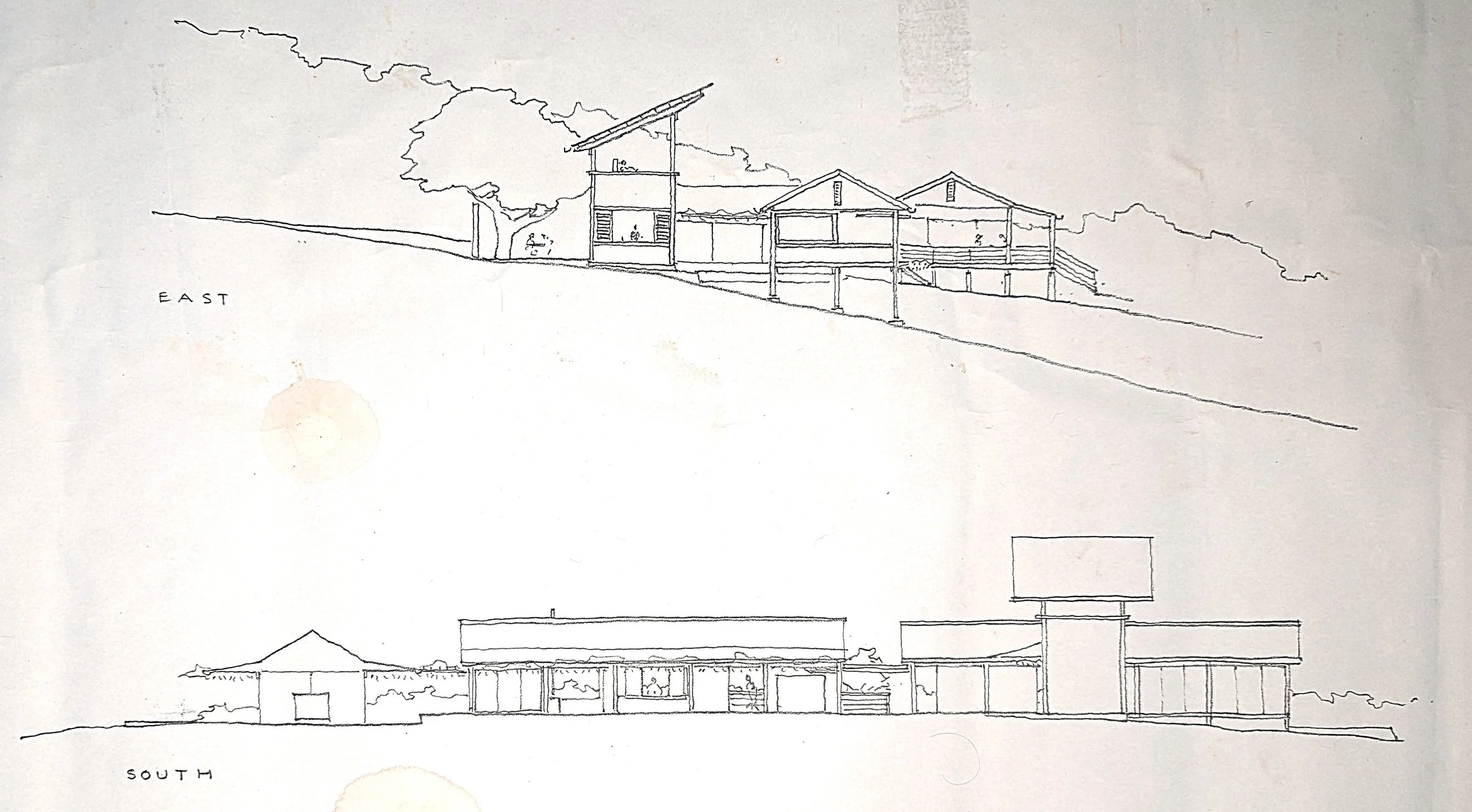
East and south elevations
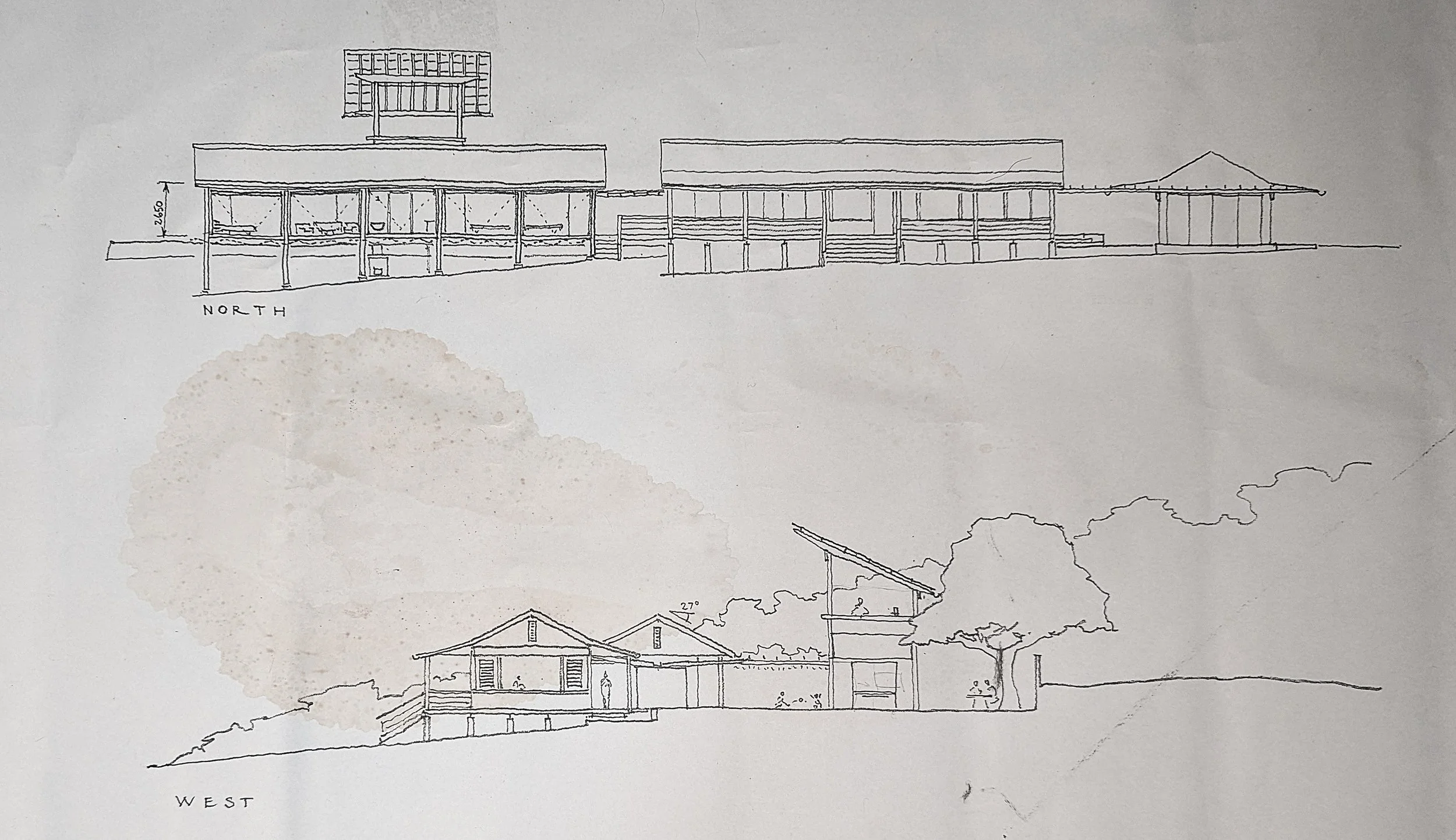
North and west elevations
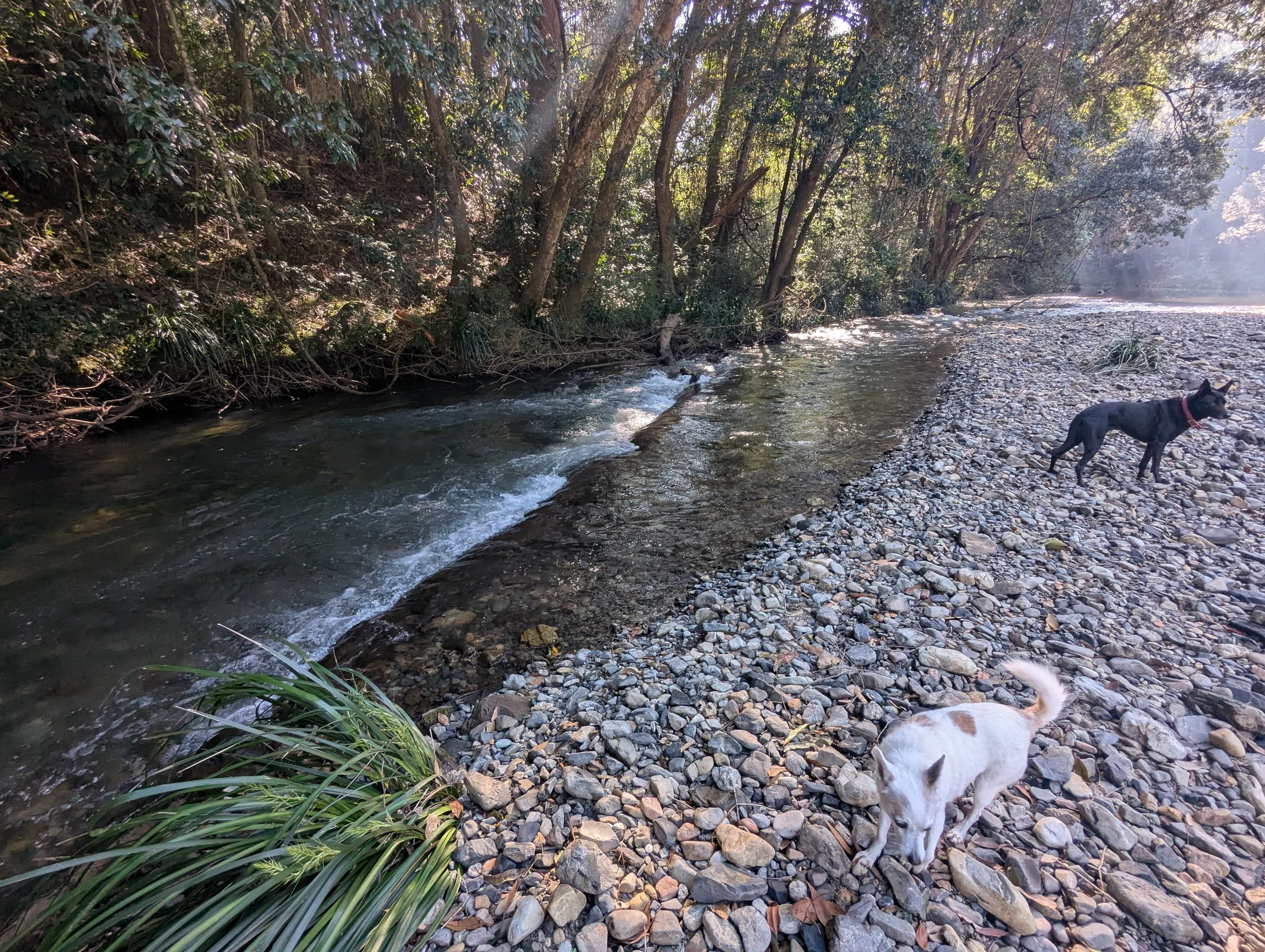
The Never Never. The fallen log causing the cascade has been in place for more than 30 years through numerous floods
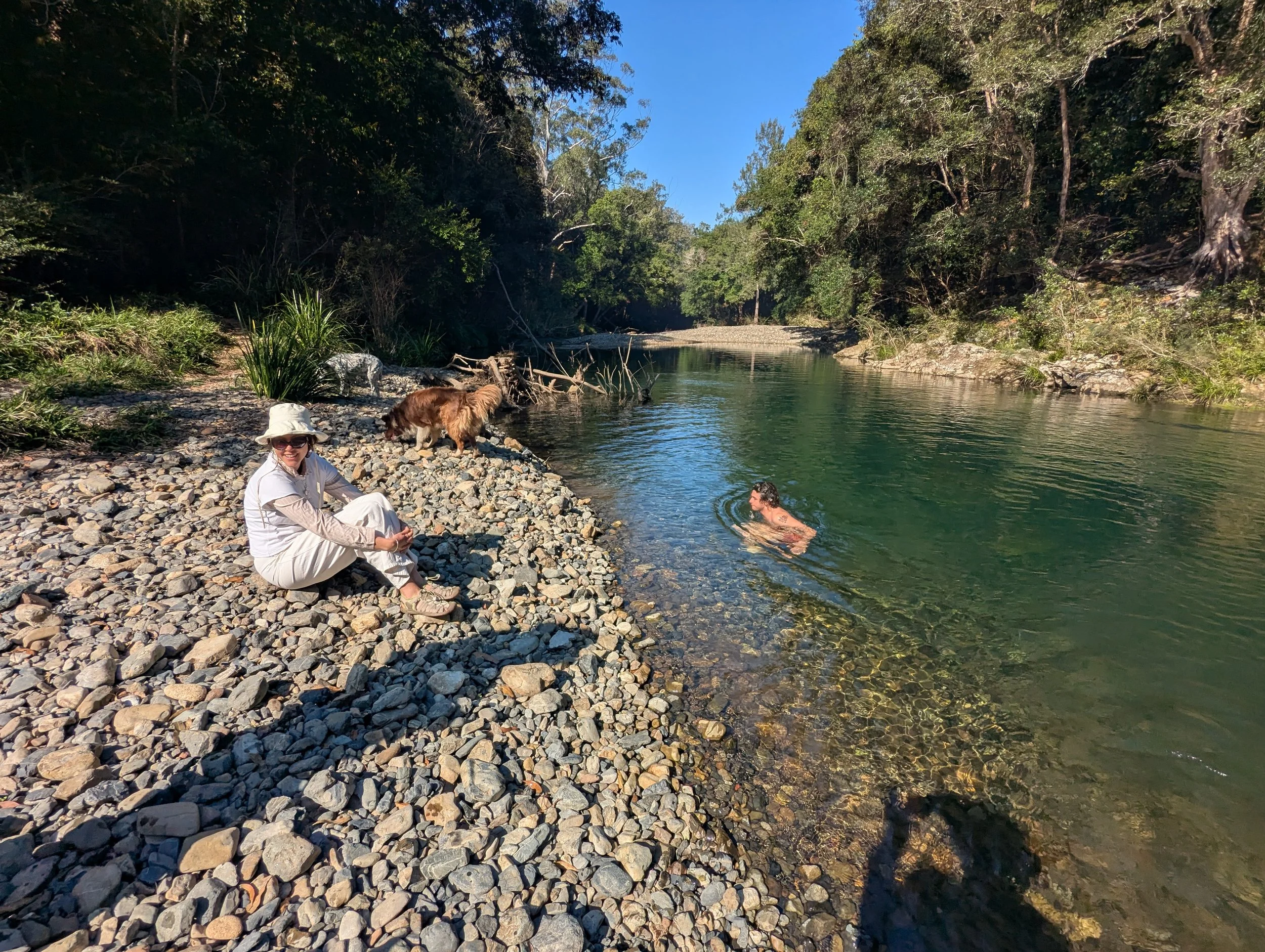
The Never Never
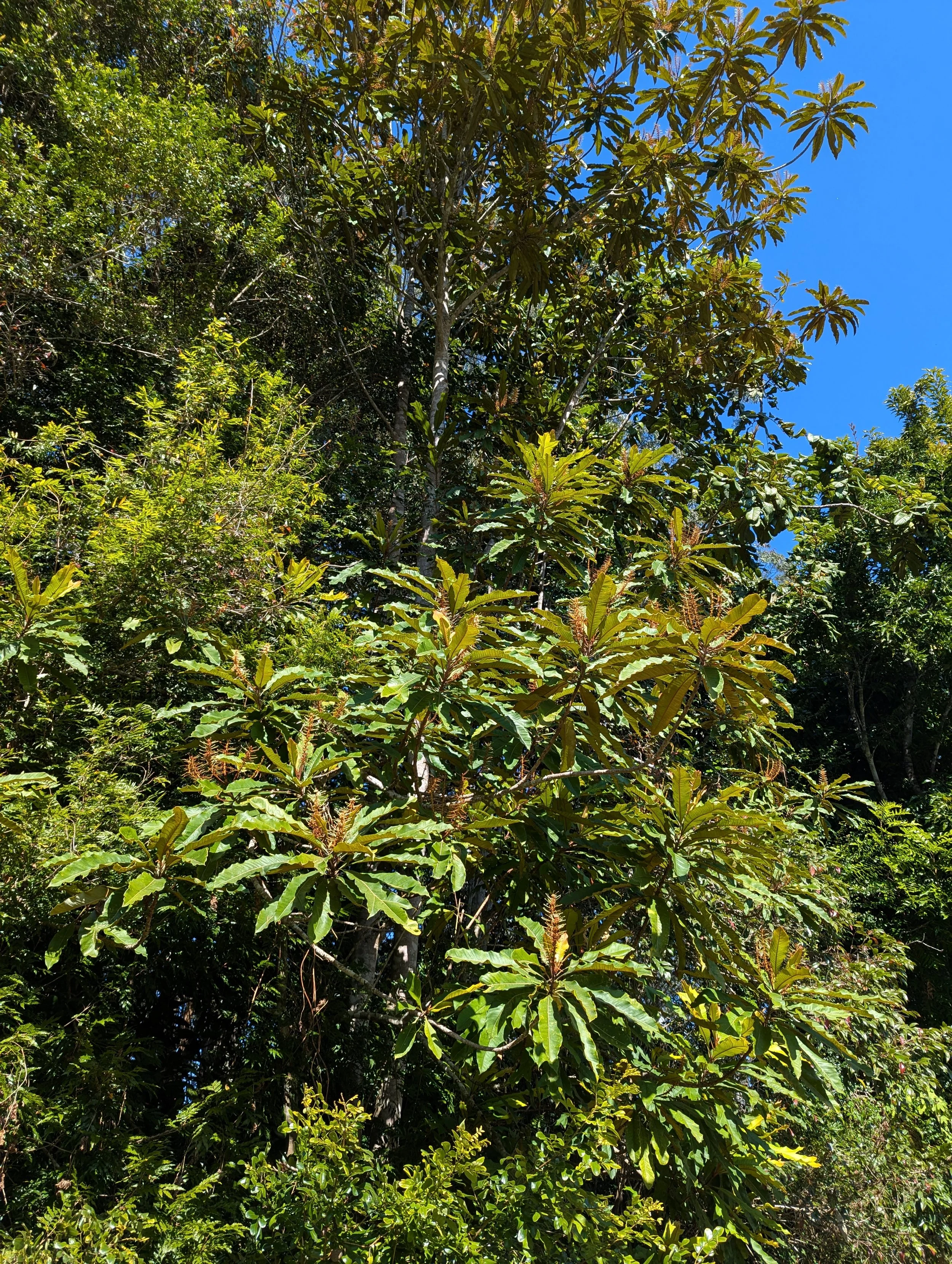
Darlingia ferruginea Rose Silky Oak. The deeply lobed juvenile leaves of this species are up to 1 metre long and carried well into maturity. The young shoots and the undersurface of the leaves are covered in rusty hairs giving the canopy a golden brown appearance. The flowers are similar to D. darlingiana but a little longer and fragrant. It is one of the most spectacular foliage plants to be seen and only in Australia could such a beautiful plant be overlooked for so long. an endemic species from the tropical rainforest of north-eastern Queensland.
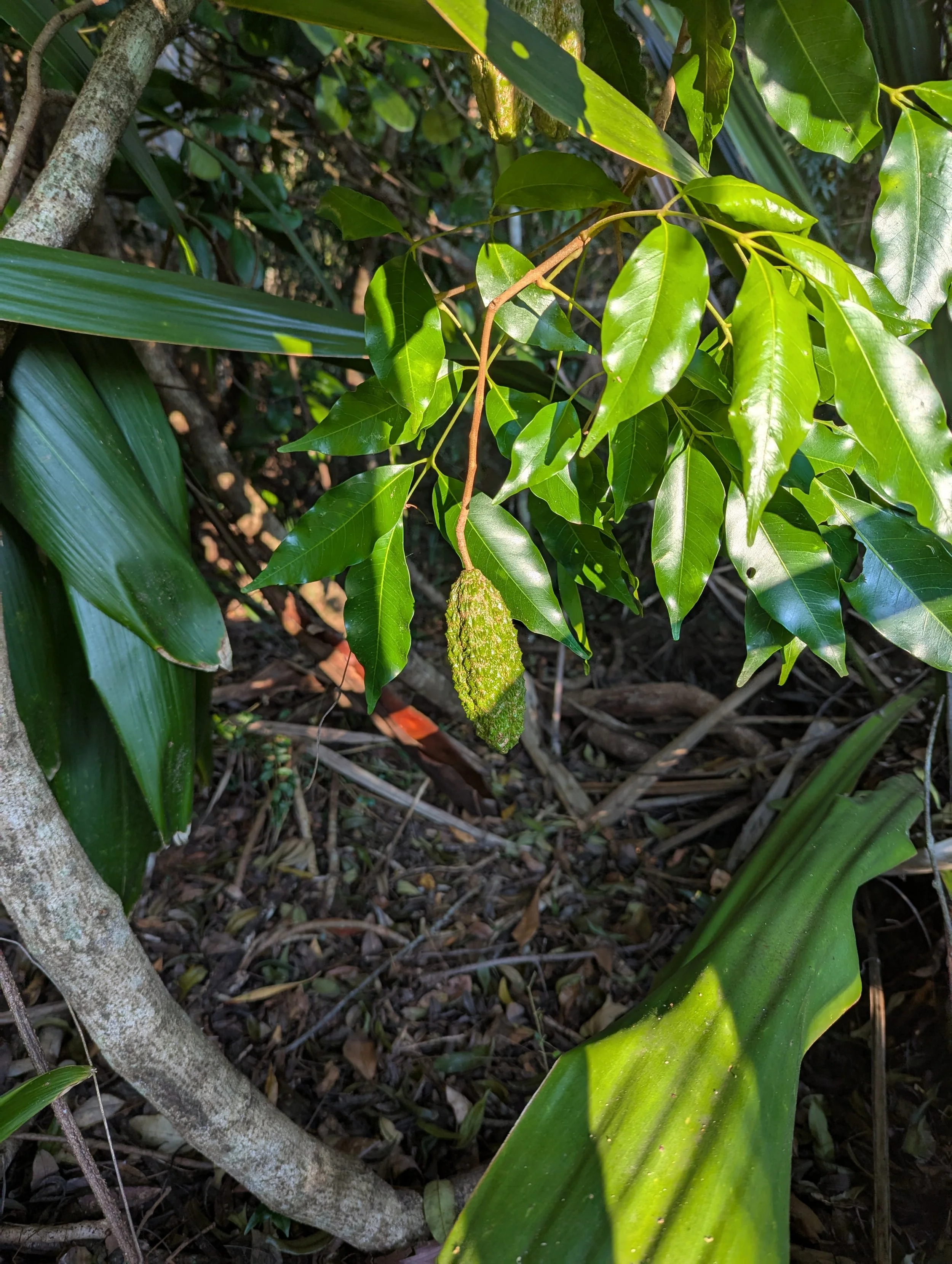
Flindersia pimenteliana Maple Silkwood, foliage and fruit. From North-eastern Queensland
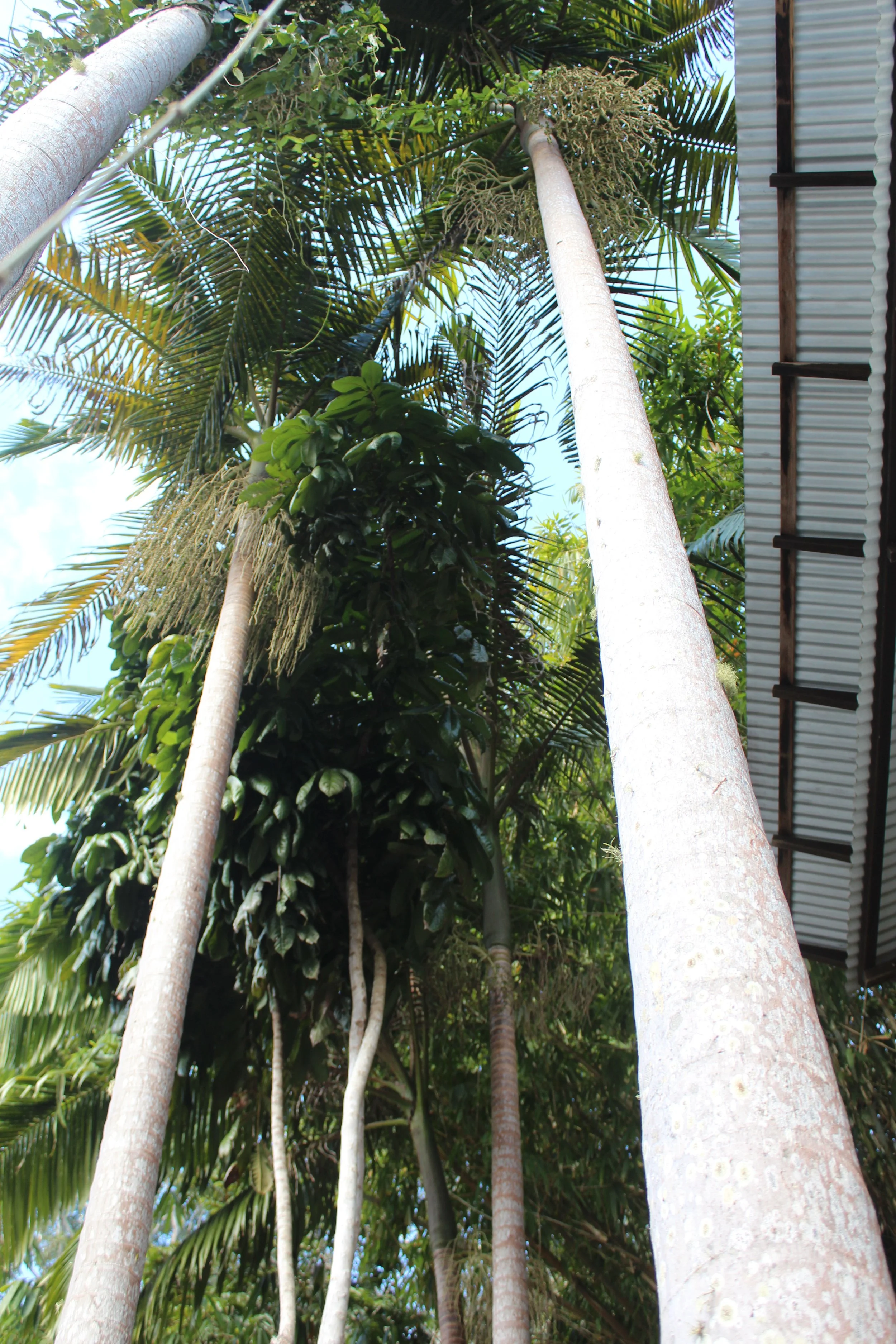
Bangalows tower over the tower. With Ooray - Davidsonia pruriens var. pruriens. Var. pruriens is the North Queensland form, larger and hairier in all respects than its southern cousin.
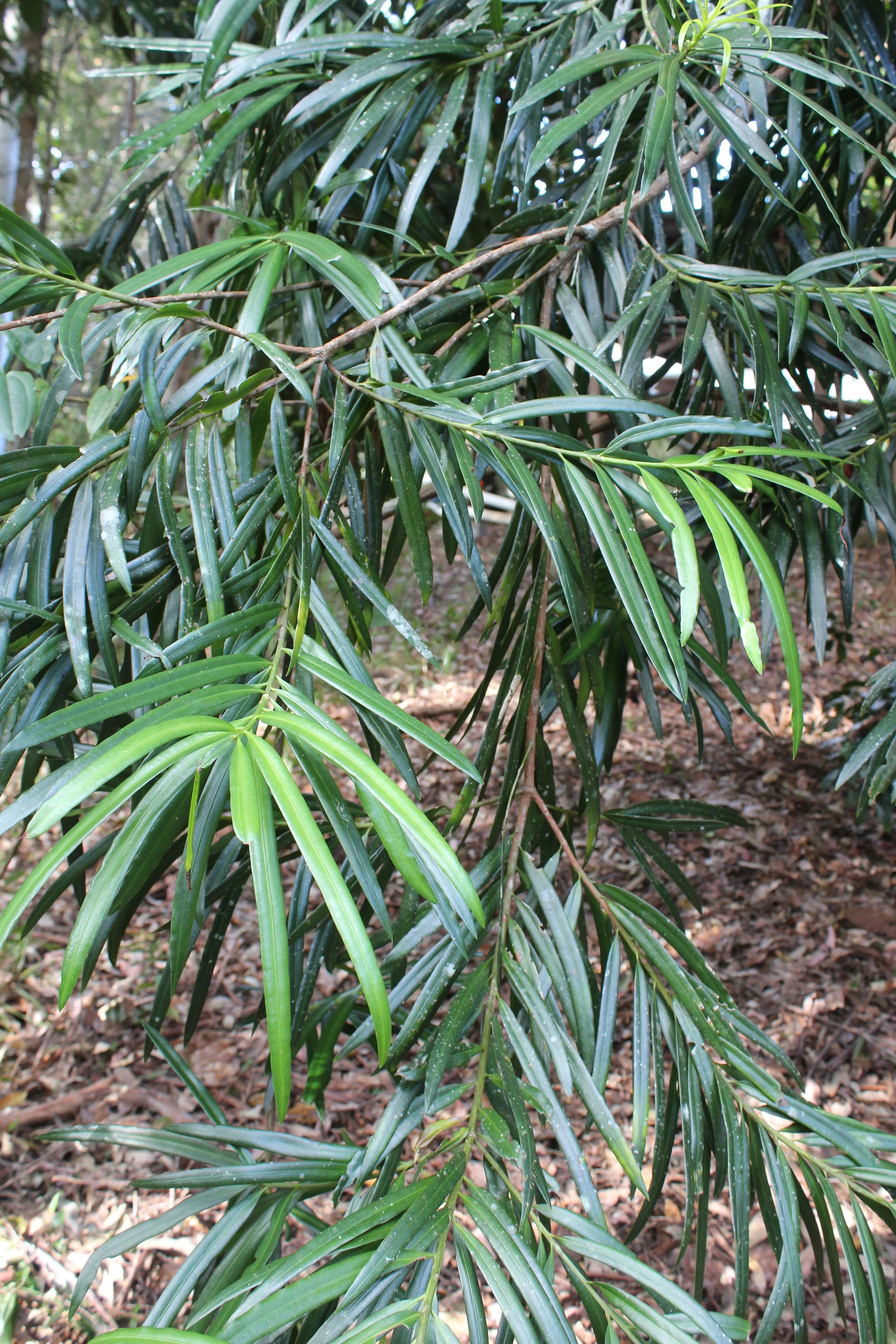
Podocarpus grayae Weeping Brown Pine. A handsome large & compact native weeping pine. Near threatened species from monsoon vine forests of the western Arnhem Land escarpment, endemic to Northern Australia. Very attractive feature screening tree with slender strappy dense evergreen foliage and striking blue seeds on red edible fruits. 10-12M
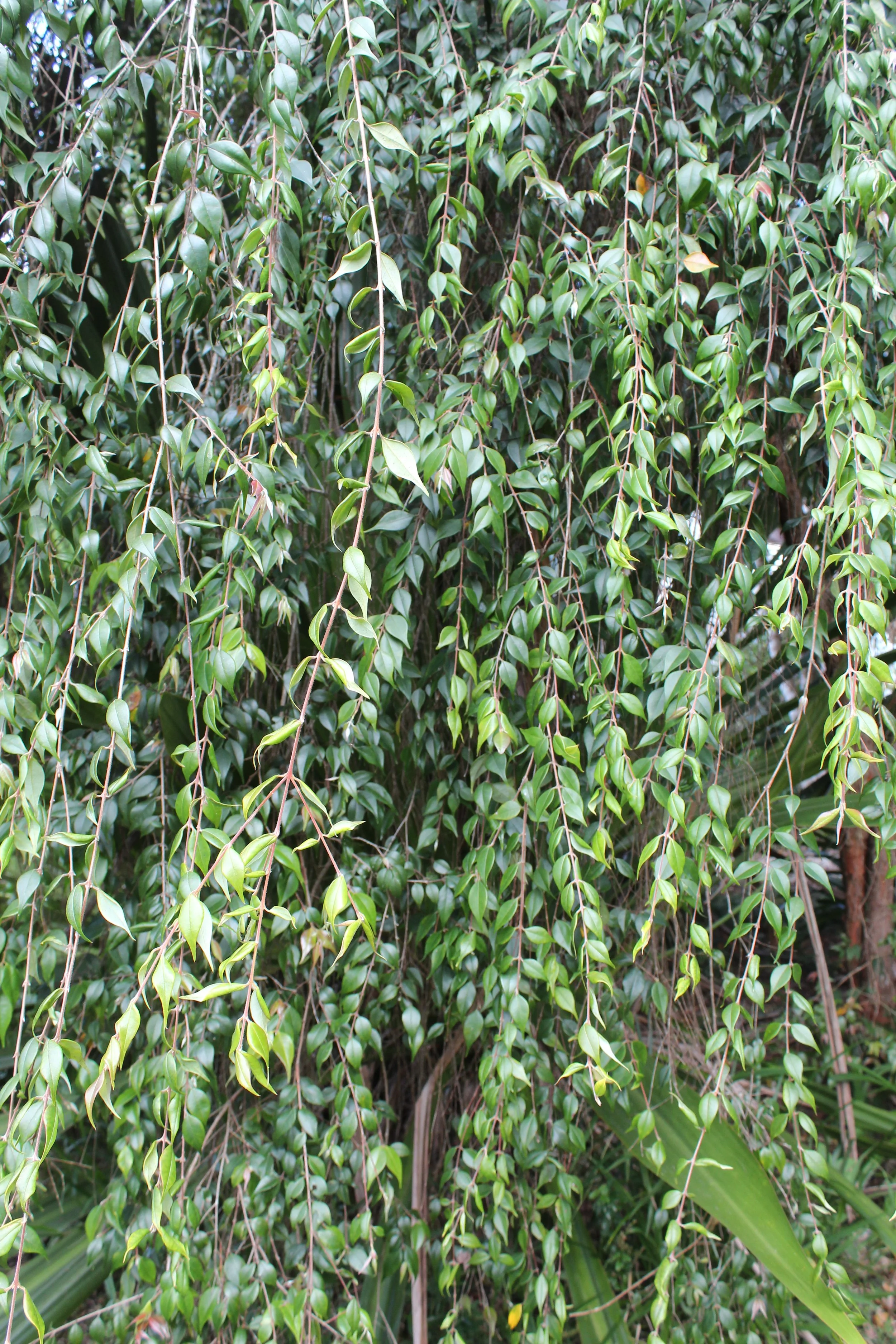
A weeping form of Uromyrtus (Syn. Austromyrtus) metrosideros Redbark Austromyrtus. Endemic to North eastern Queensland, restricted to the higher mountains from Mt Finnigan to the Bellenden Ker Range from 1150-1550 m. elevation. Grows in stunted rain forest on exposed ridge tops.
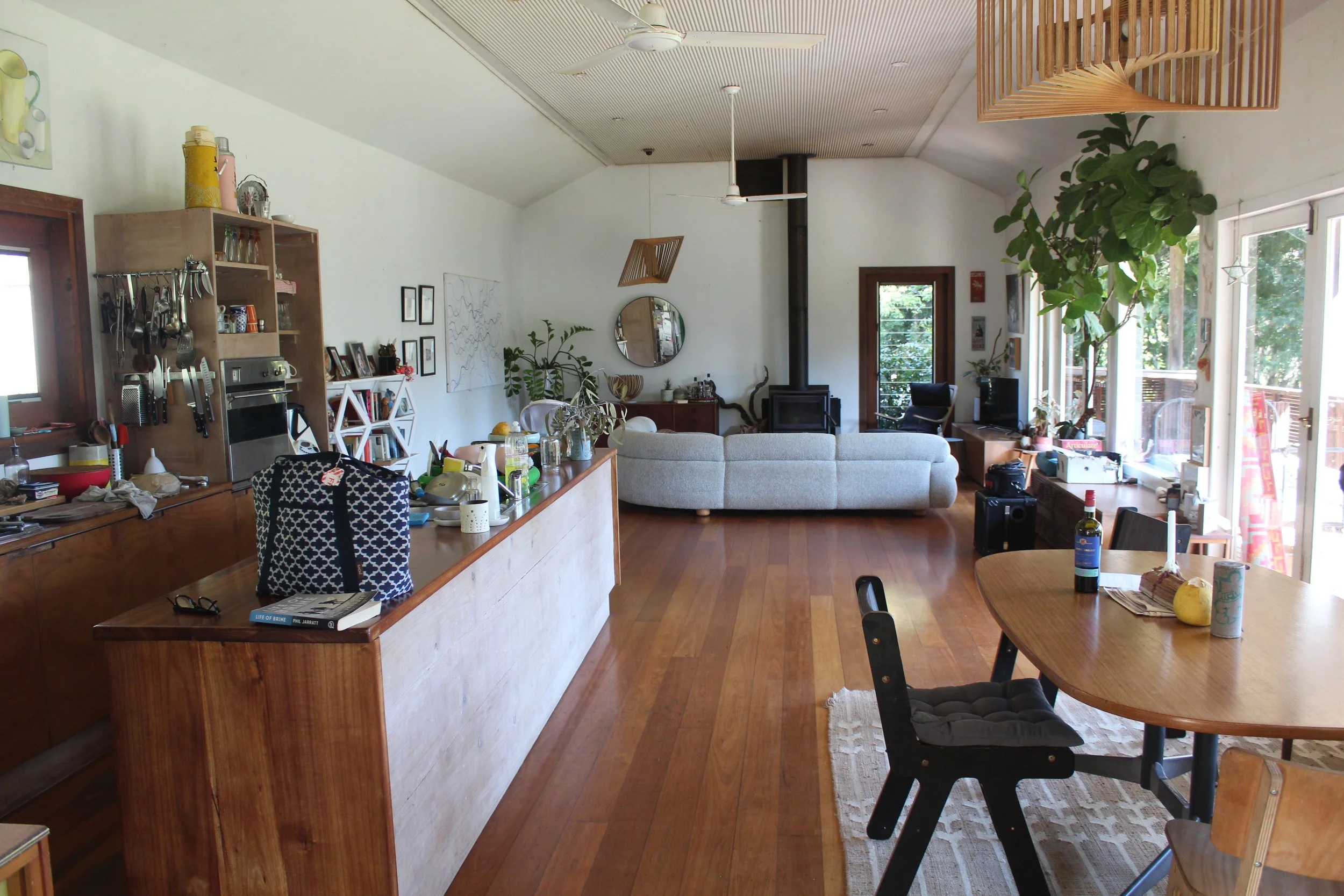
Interior of the first building completed in 1995. The floor is 6 inch Blackbutt boards, the kitchen is Hoop Pine and Blackwood Acacia melanoxylon (both purchased for $200 from a farmer in Dorrigo who milled both trees after a storm had fallen them), and the ceiling is ripple iron. All the second-hand glass came up from the nursery in Dural.
Pulpit Rock "Fortress Lookout" completed
MAK Urban Group have completed significant construction works to 33 Parallel’s design at the renowned Pulpit Rock Lookout, a prime tourist destination within the Blue Mountains National Park. The project focused on enhancing visitor accessibility with a brand new all-accessible lookout now named “Fortress Lookout” to complement the existing lookout which is challenging to access and will be re-opened in 2026. The project also included the design of a large-scale carpark with seating and picnic areas, a major bio retention basin, and an upgraded walking track to the Lower Pulpit Rock Lookout. Mak Urban Group have a great video of the almost completed Fortress Lookout and the car parking and picnic area layout on their website https://www.makurbangroup.com.au/projects/pulpit-rock-lookout
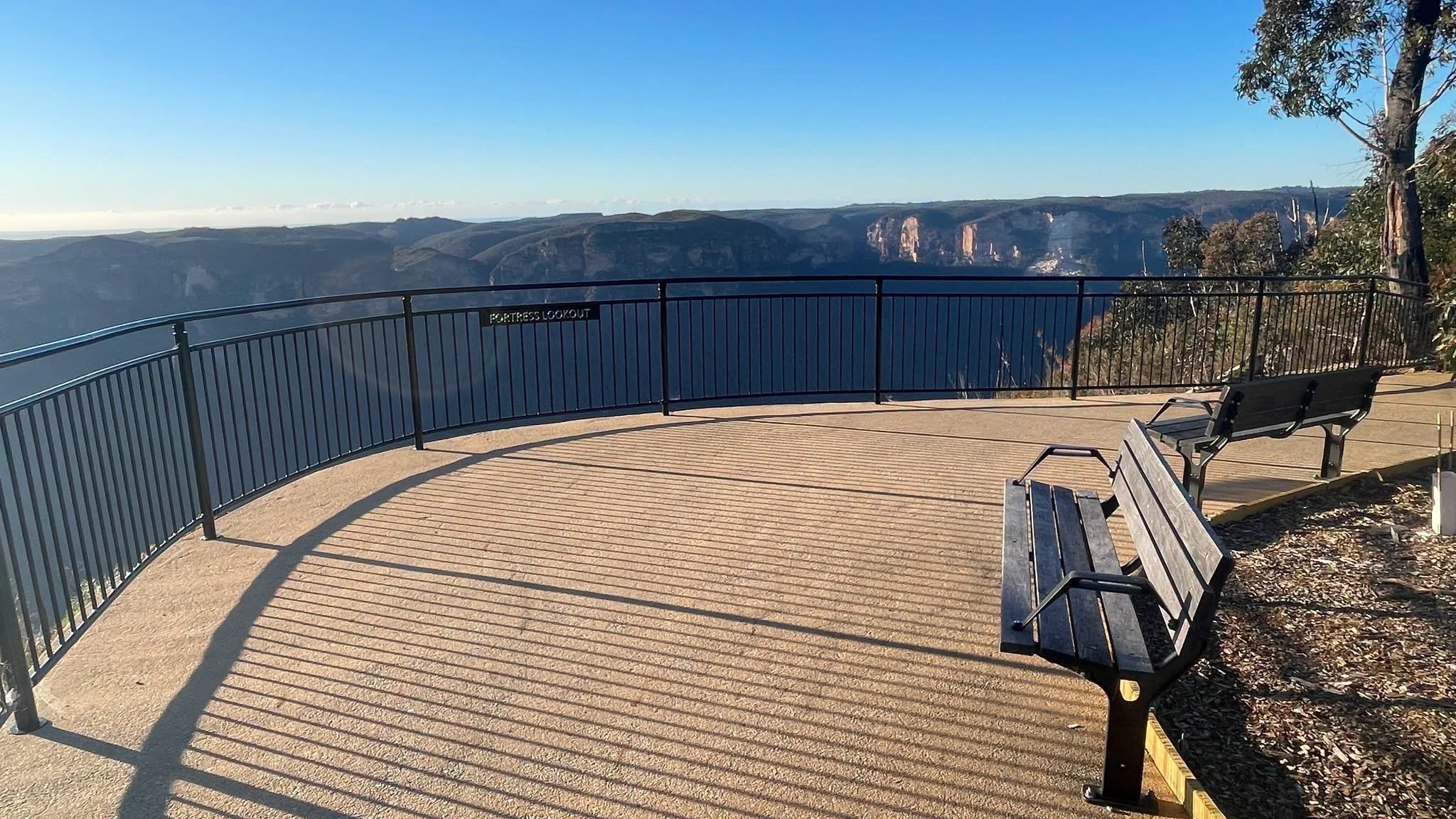
The new all-accessible lookout named the “Fortress Lookout” with views north and east into the Grose River Valley. Photo; Ask Roz Blue Mountains
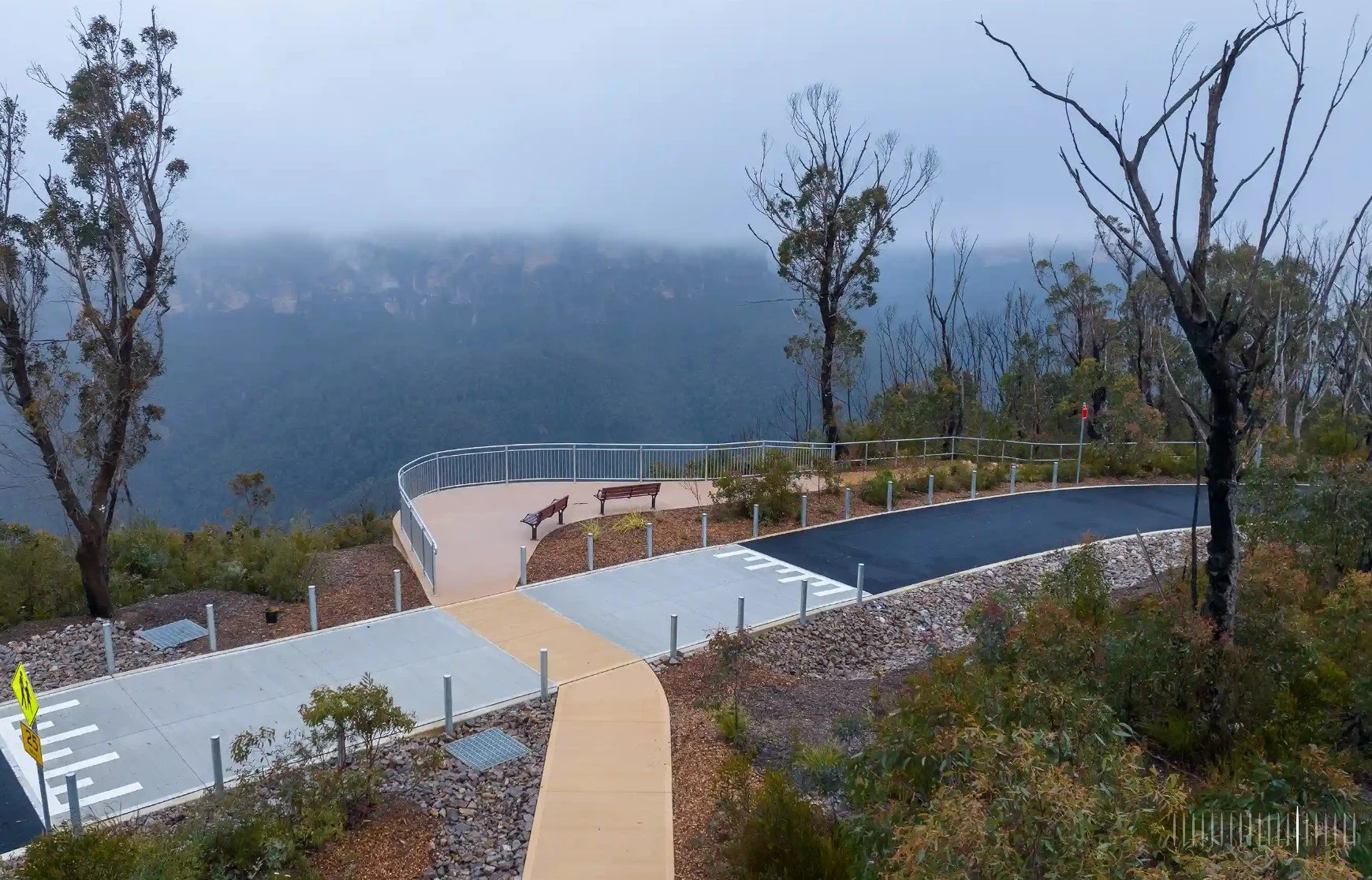
The new “Fortress Lookout” easily accessible at only 50m from the new car park with views north and east into the Grose River Valley. Photo; MAK Urban Group
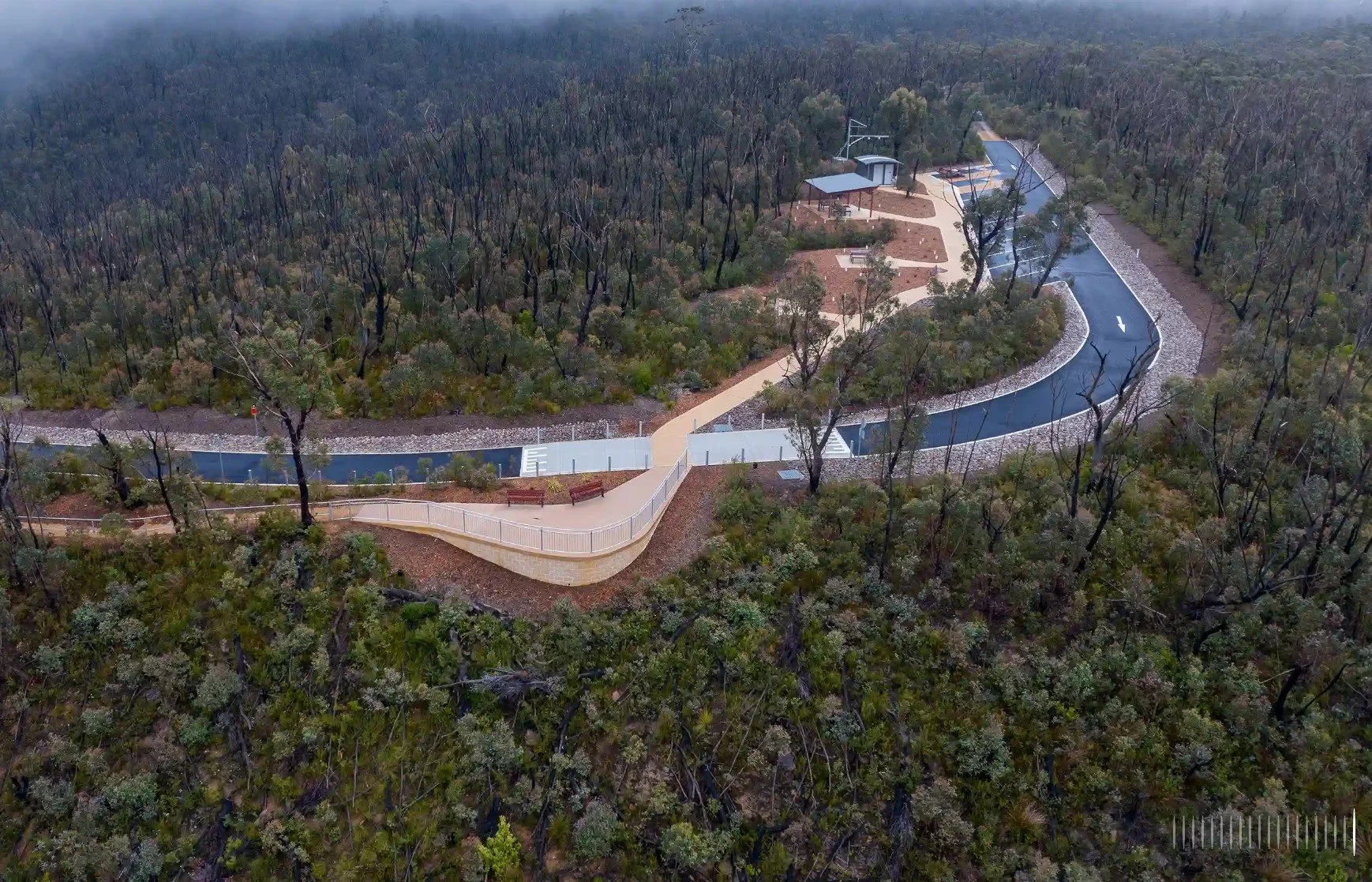
Photo; MAK Urban Group
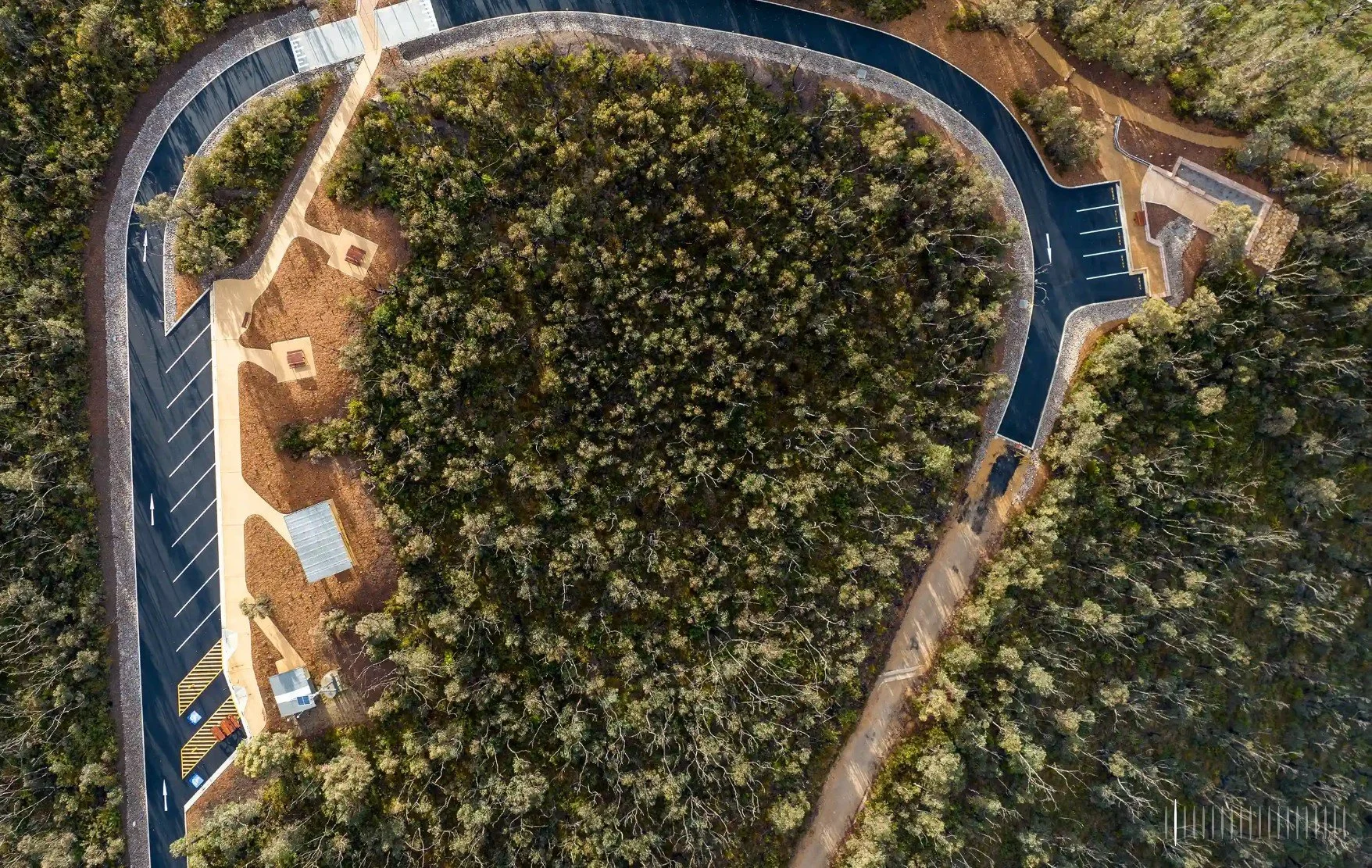
Aerial view of the upper and lower carparks. Photo; MAK Urban Group
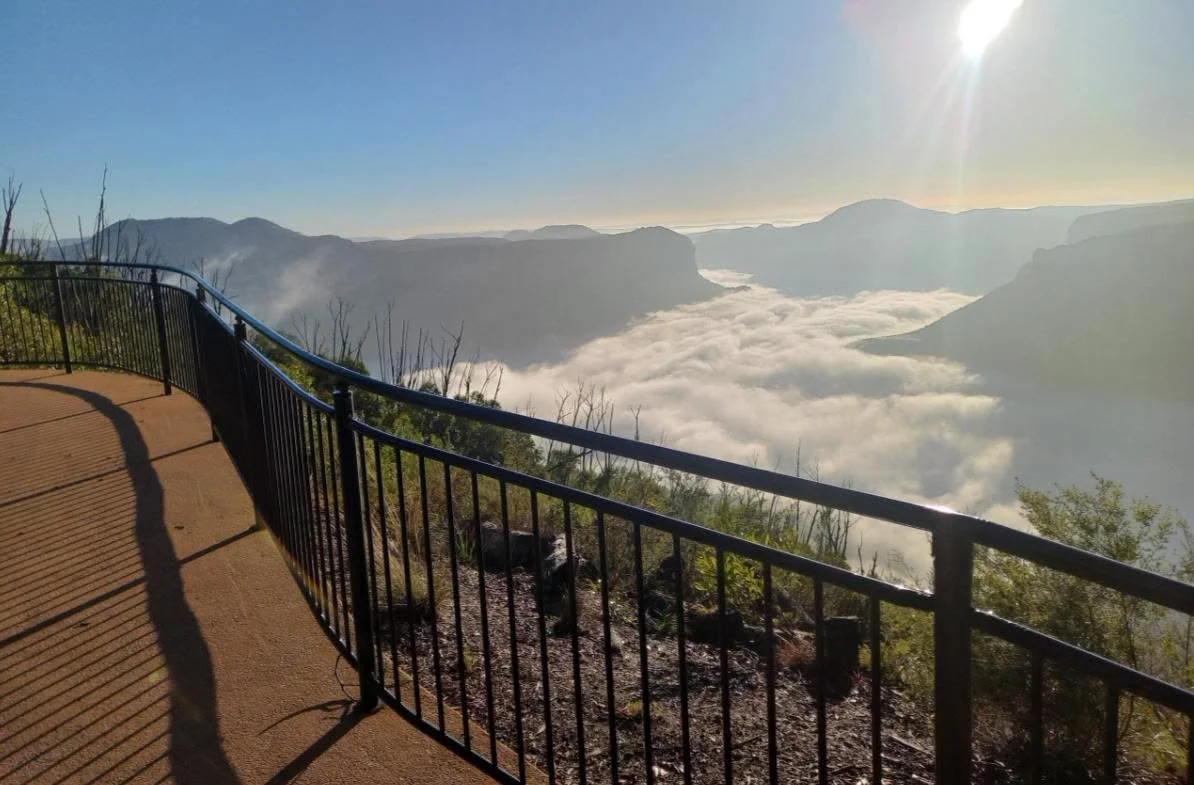
Photo; Blue Mountains City Council
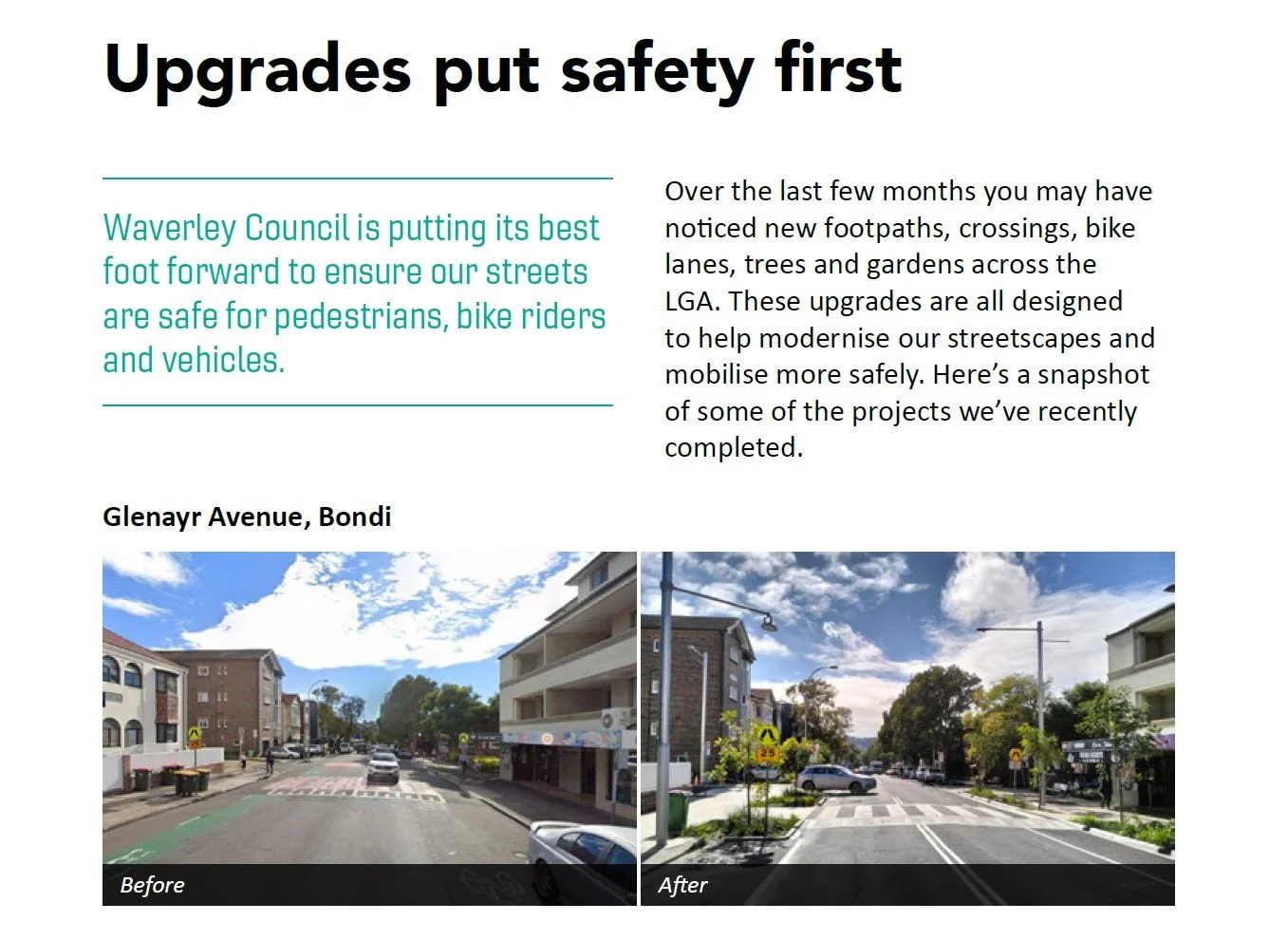
Bondi Streetscapes
From Waverley News Spring 2023……The Bondi Basins Streetscape upgrades included major upgrades to both Glenayr avenue and Curlewis Street Bondi Beach. Landscape design by 33 Parallel
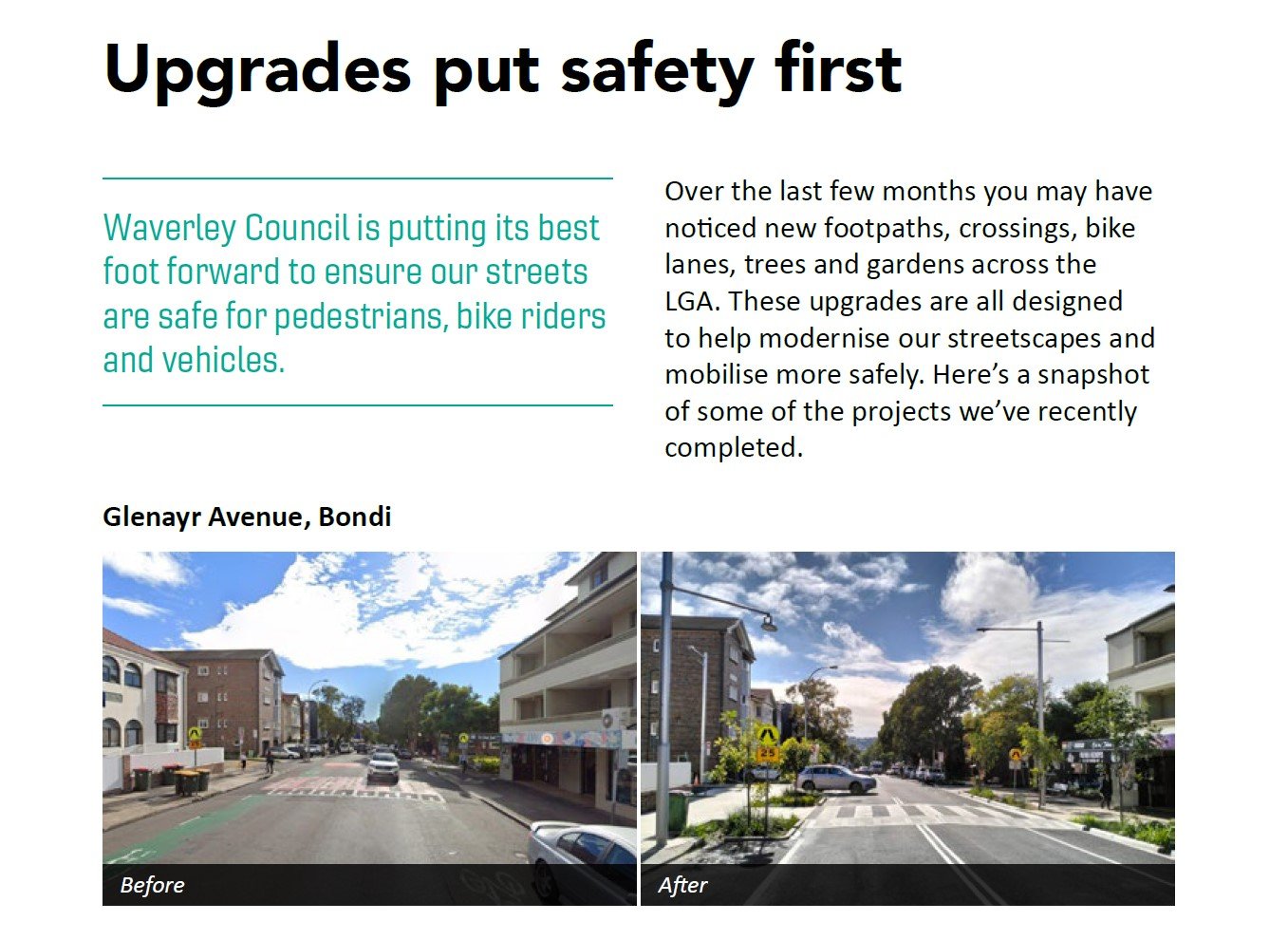
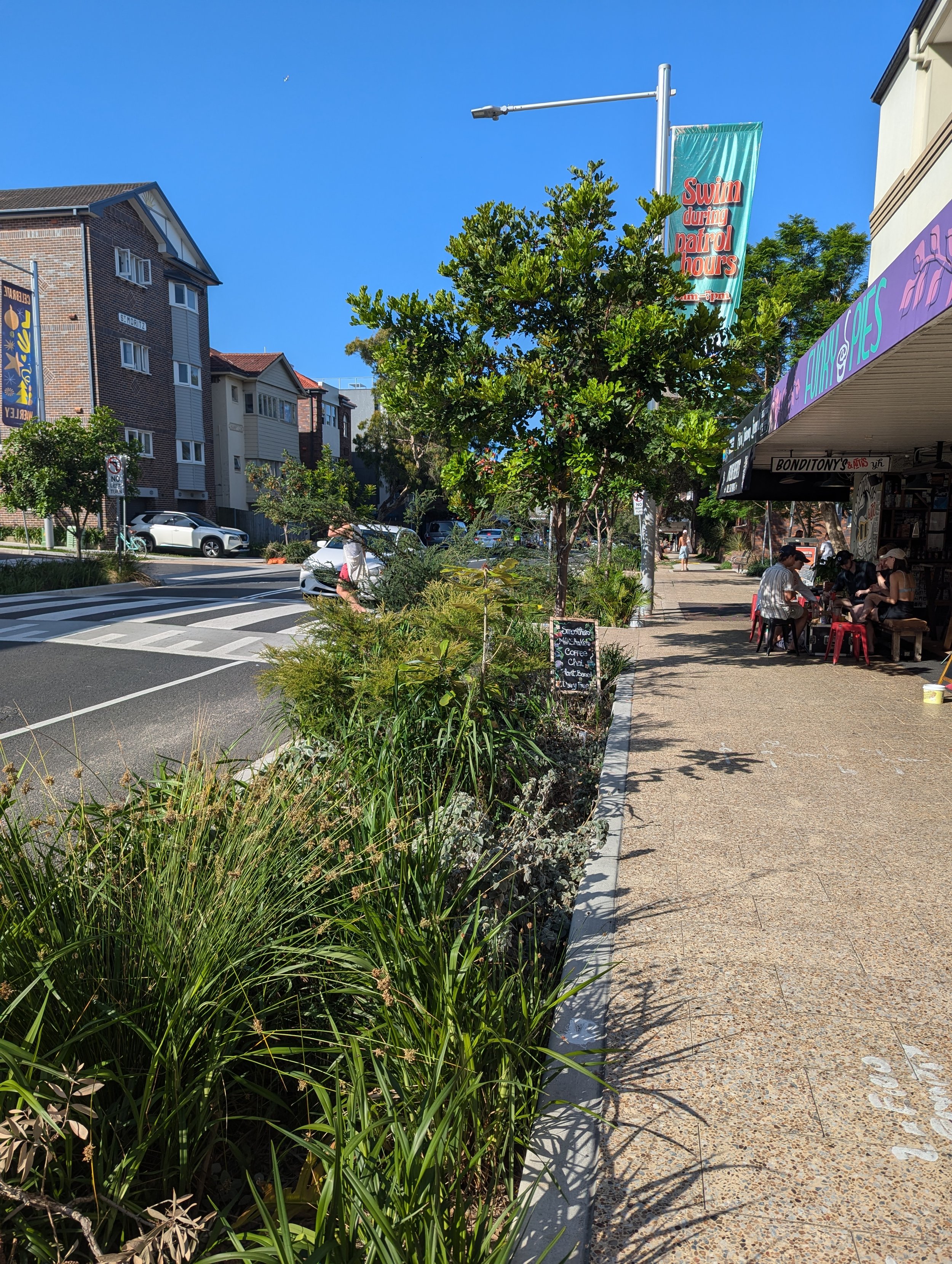
Glenayr Avenue upgrade - landscape design by 33 Parallel

33 Parallel prepared this artist’s impression of the final intersection shown in the image above
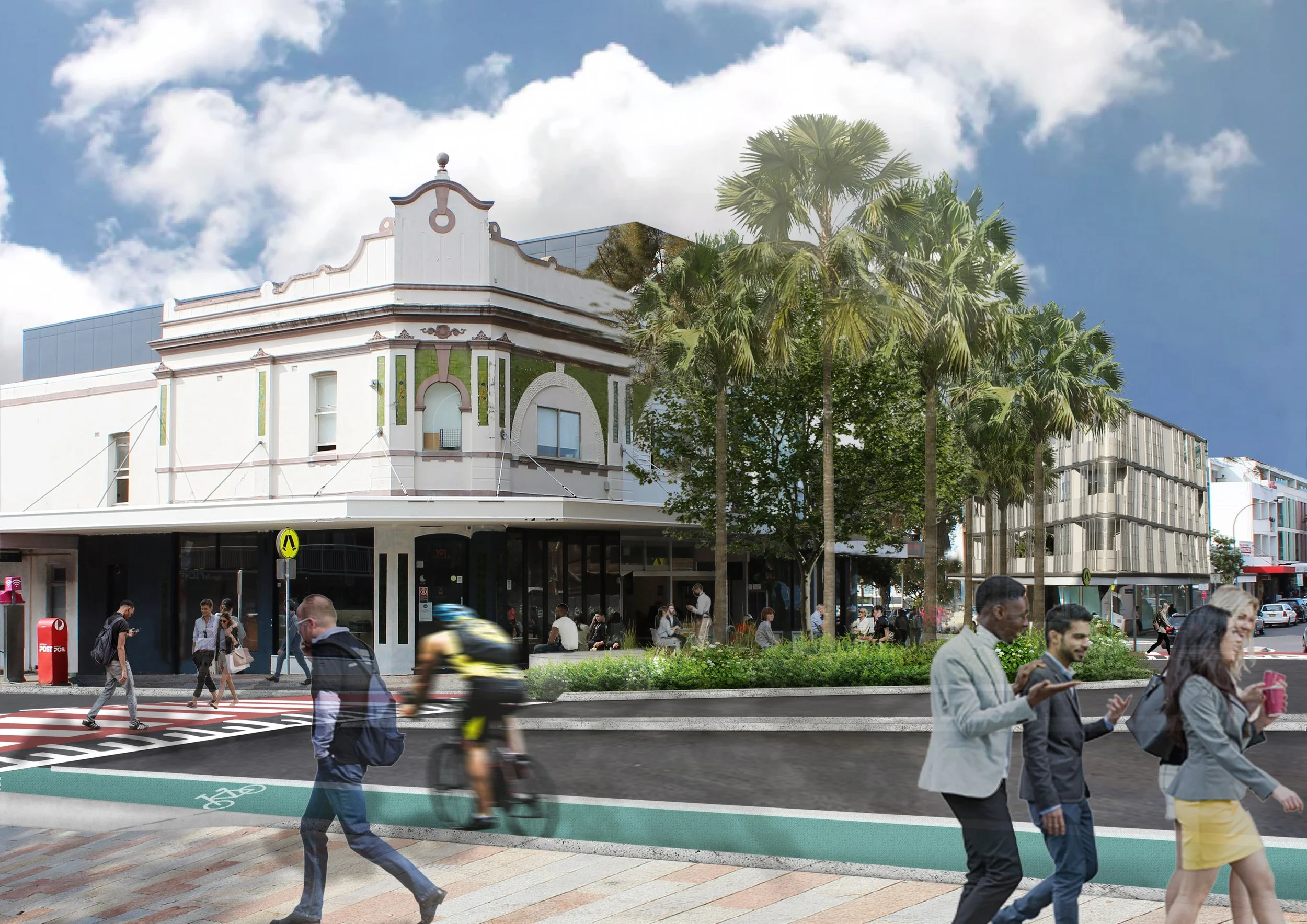
33 Parallel prepared this artist’s impression of the Glenayr-Hall-O’Brien Street intersection
2021 AILA NSW Award for Landscape Architecture for Infrastructure
The Pacific Highway Upgrade has just won the 2021 AILA NSW Award for Landscape Architecture for Infrastructure. The citation reads:
In this legacy project that has been undertaken over a 24-year period, the landscape architect has been instrumental in the delivery of sustainable outcomes associated with the planning, design and implementation of the 675-kilometre duplication of the highway between Hexham, New South Wales and the Queensland border.
33 Parallel director Darren Mansfield, as director / lead landscape architect, has been involved in a good number of the individual upgrades that make up the Highway, so it is as good a time as any to reminisce about some of them, starting with ;

Aerial view of the 60 metre wide Koala crossing at Bonville on the Pacific Highway
Bonville- After advising on the planting for the Brunswick to Yelgun section, Darren, while director at design firm HBO+EMTB Urban and Landscape Design was the lead landscape architect for the Detail Design to Construction of the Bonville upgrade which included a 60 metre wide vegetated Koala crossing overpass.
Devils Pulpit-Detail Design to Construction
Oxley Highway to Kempsey – Concept Design
Macleay River and Floodplain Bridge – Tender Design to Construction
Oxley Highway to Kundabung – Tender design to construction
Kundabung to Kempsey – Detail Design
Nambucca Heads to Urunga-Tender Design to Construction
Tintenbar to Ewingsdale – Construction Phase
Glenugie to Maclean - detail design and construction documentation.
It’s also worth mentioning the 50km long Hunter Expressway which branches off the M1 Pacific Highway and was the first dual carriageway greenfield hinterland expressway to be constructed by NSW Roads and Maritime. Darren led the urban and landscape design for both sections working with Lend Lease on the western section between Kurri Kurri to Branxton and with the NSW Roads and Maritime/Theiss/Hyder/PB Alliance on the eastern section between the F3 to Kurri Kurri.
And more from the AILA award citation for Pacific Highway:
This sweeping green highway provides panoramic views to the Great Dividing Range and forests, farmland and coastline. The sustainable outcomes have been exceptional and include the provision of an important connection to Country and the creation of an environmentally sensitive and responsive landscape.
Social and environmental outcomes include the minimizing of visual impacts, the provision of rest areas and parks, the integrated design of bridges, tunnels and walls, and the maximizing of landscape spatial qualities such as soils, planting and seeding. These measures have significantly improved the design and created an outstanding outcome for both the community and the stakeholders.
The depth of thought and leadership demonstrated in this project has resulted in a national benchmark for highway design with an ecological dimension.
Landscape Heritage

“Elwatan” Garden at West Pennant Hills, now the site of Oakhill College. Vestiges of the original garden remain.
33 Parallel is nearing the end of a year long comprehensive study of the Hornsby Shire’s landscape heritage in collaboration with Extent Heritage who are also undertaking the archaeological heritage study of the Shire. The study seeks to capture all cultural and natural landscapes and attributes that have heritage significance, consolidate and collate the information from previous studies, review and assess the current landscape, update the heritage schedule and inventory sheets.
Study has required ground-truthing and photographic documentation of almost 300 key sites, gardens, parks, vegetation communities, individual trees and scenic landscapes, in order to document changes to existing listed landscapes, update inventory sheets and develop landscape management principles.
The study will also provide a practical tool for Council to manage development in relation to cultural and natural landscape heritage and inform the landscape heritage content of the subsequent LEP and DCP review.

Les Smith’s orchard at West Pennant Hills. The Hills district supplied most of the nations citrus needs and by the mid-nineteenth century, Hornsby Shire had become synonymous with the growth of citrus.

Paddington House as featured in Belle Magazine Jan-Feb 2021. Roof top terrace and garden by 33 Parallel


A diverse range of perennial flowering plants both native and exotic was chosen to attract bees and to provide a constantly changing outlook for the upper bedrooms.
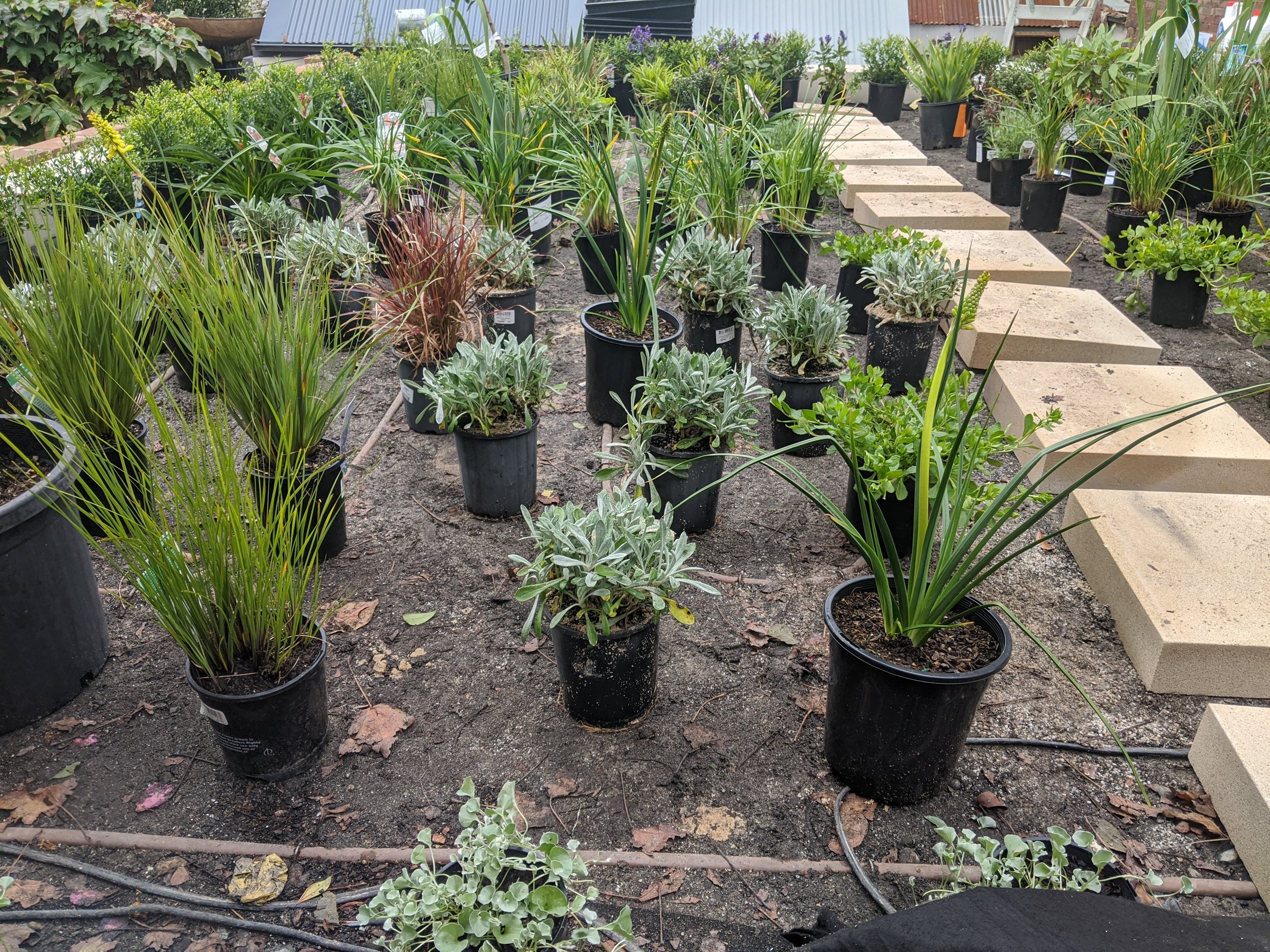
Setting out the plants and path for the landscapers from Bates Landscapes.
Echo Point Upgrade completed
With a spectacular Blue Mountains backdrop of The Three Sisters and the Jamison Valley, the newly upgraded lookout at Echo Point, Katoomba designed by 33Parallel, was officially opened during NAIDOC Week (14 November 2020).
Blue Mountains City Council Mayor, Mark Greenhill OAM, Senator The Hon. Marise Payne and Gundungurra and Dharug Traditional Owners, represented by Aunty Sharyn Halls and Chris Tobin, opened the new accessible Gathering Place, lookout and walking tracks.


33 Parallel in East Arnhem land
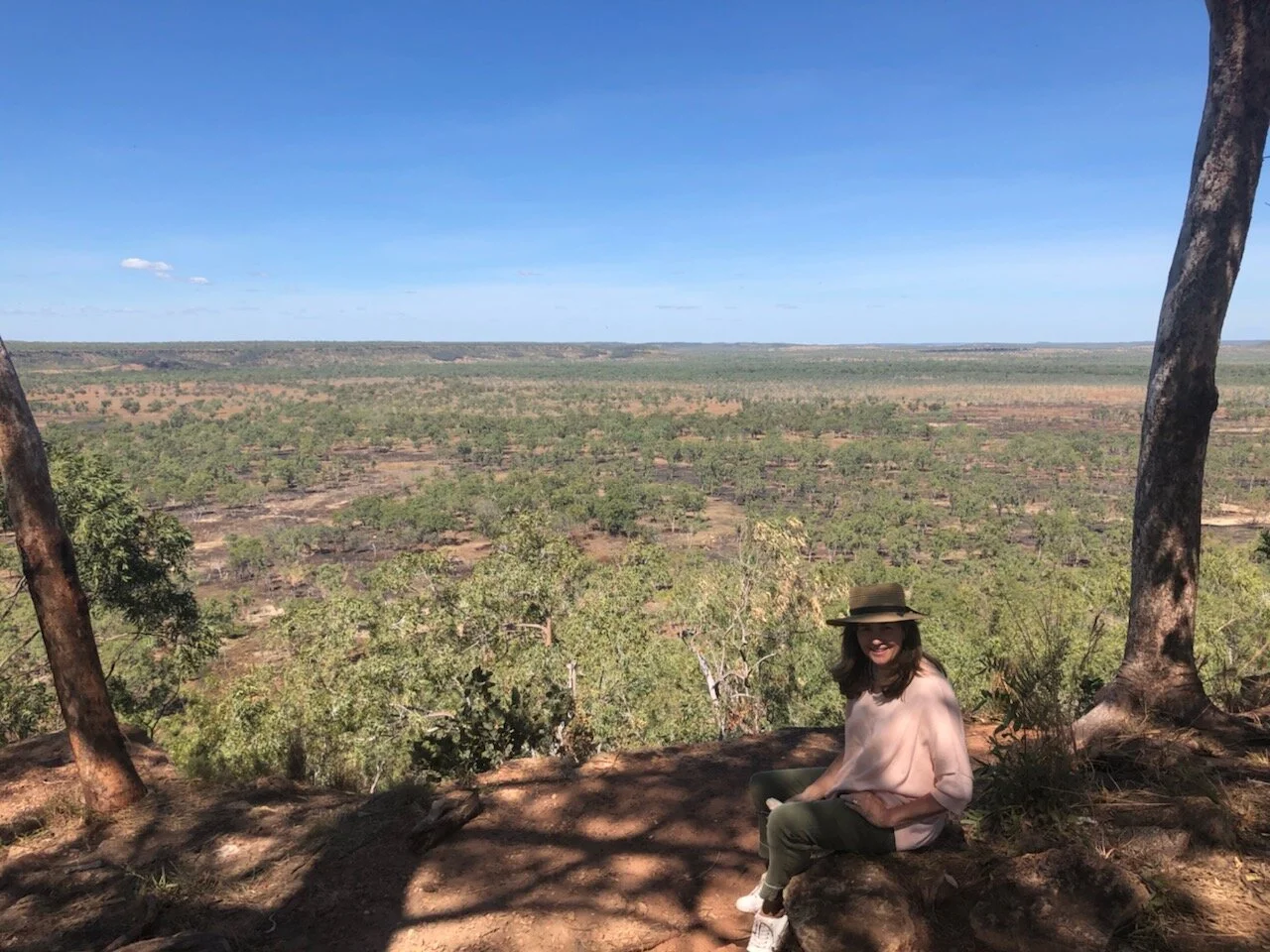
After 10 weeks based in Gapuwiyak in East Arnhem Land , 33 Parallel’s Donna Mack is returning for a longer period to continue working with the Goŋ-Ḏäl Aboriginal Corporation to assist in establishing a program to encourage and support Yolŋu entrepreneurship in Gapuwiyak and surrounding homelands.
The Corporation plans to support participants with locating business opportunities, sources of capital and business management so they can operate successfully and independently in relevant markets, and improve the uptake of entrepreneurship and innovation in East Arnhem Land where business participation is low compared to the wider Australian economy.
Gapuwiyak is a small, inland Yolŋu town about 16 kms from the coast in the middle of Miyarrka, a region around Arnhem Bay, and located on a small lake called Lake Evella. This year will be the 50th anniversary of the town’s establishment.

ECHO POINT MOVES TO CONSTRUCTION STAGE

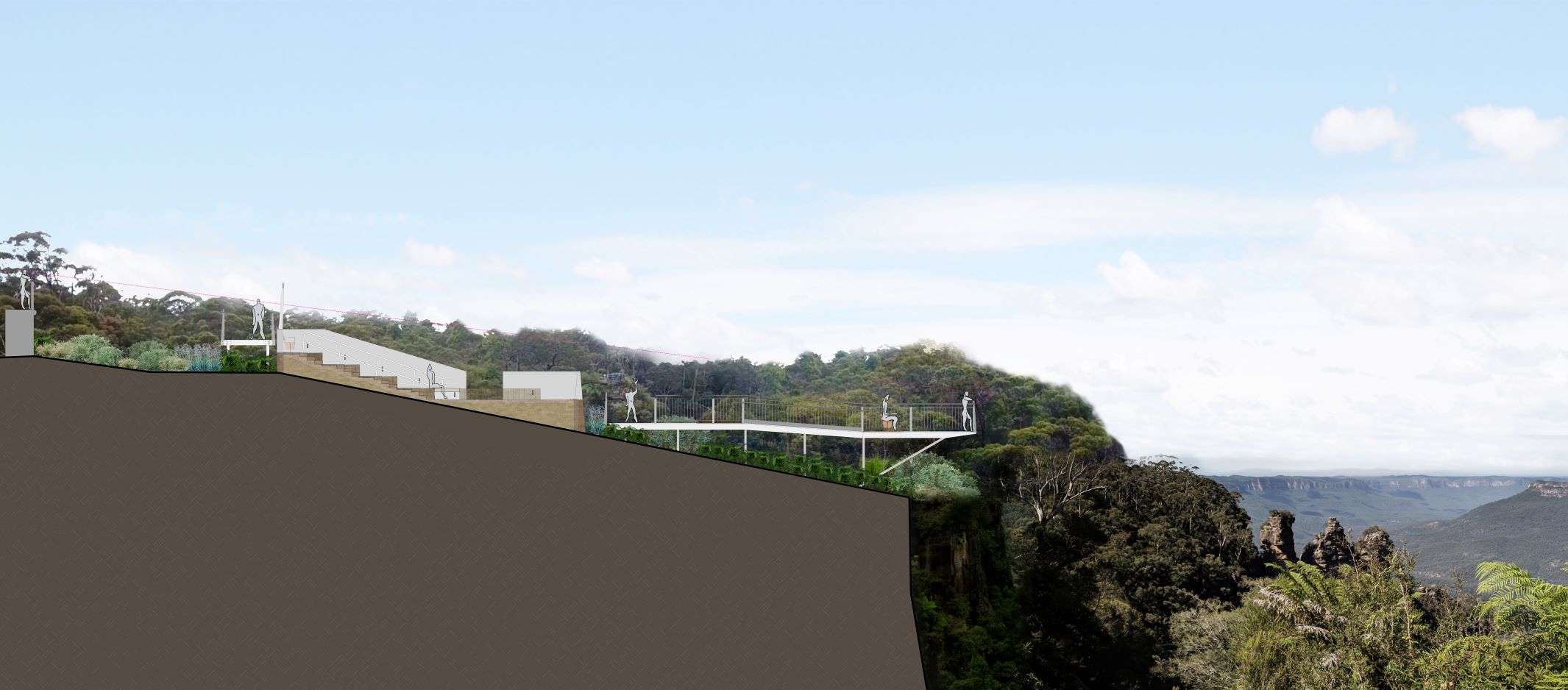
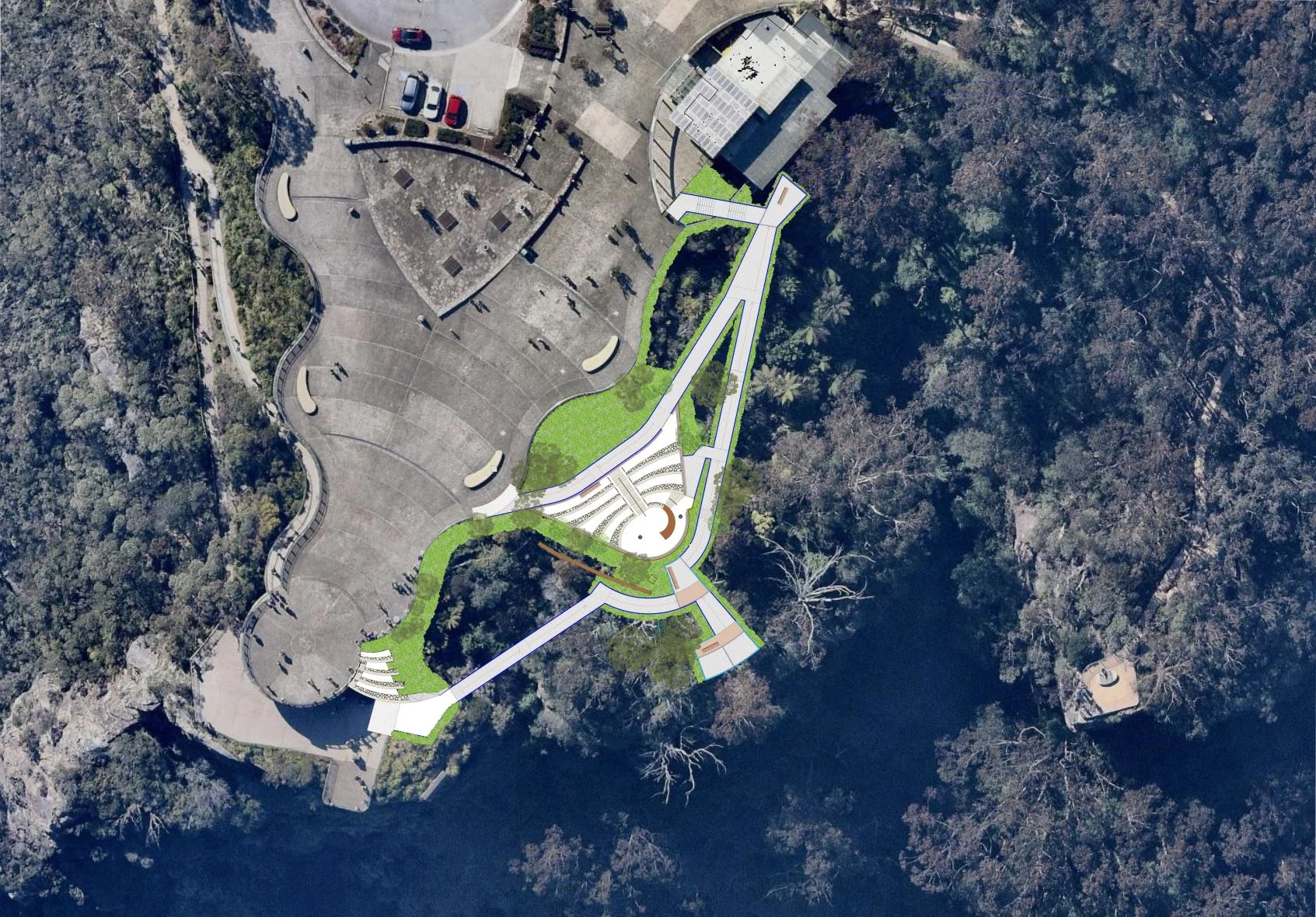
33 Parallel has recently completed the detail design and documentation for the Prince Henry Cliff Walk and Gathering Place at the iconic Echo Point Katoomba for the Blue Mountains City Council.
A wheelchair accessible raised boardwalk, bridge and lookout replaces the original track which had failed due to landslip and had been closed for several years.
At the entry to the boardwalk from the existing Queen Elizabeth lookout, bleachers have been added to provide a convenient and safe place for tourists to take photographs with the Three Sisters as a backdrop.

The walled Gathering Place provides amphitheatre style seating for groups learning about the Aboriginal stories of the location and will incorporate artwork in the pavement and pavement lighting. The walk is anticipated to open early in 2020 and has been designed to integrate with a future connection to the National Parks Three Sisters Walking Track.